Barclays reopens revamped Cambridge Eagle Lab for climate tech startups
Barclays has reopened its revamped Cambridge Eagle Lab, a space where high-growth climate tech startups can connect, grow and scale.
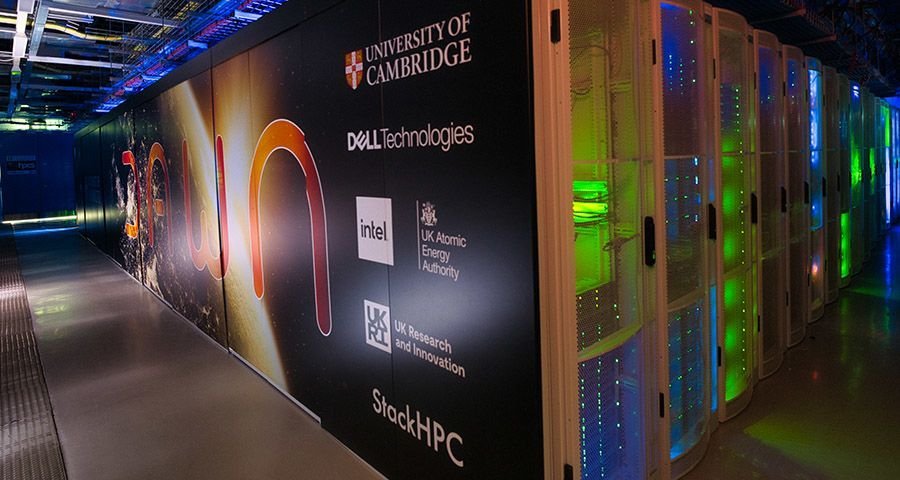
Dawn is capable of delivering 19 petaflops of FP64 performance
An AI supercomputer with enough power to help researchers solve the world’s most complex challenges is now up and running in Cambridge.
Based at the University of Cambridge’s Open Zettascale Lab, the supercomputer, Dawn, is the result of a long-term co-design partnership between the Cambridge Open Zettascale Lab, directed by Dr Paul Calleja, and global tech leaders Intel and Dell Technologies, with support from the UK Atomic Energy Authority (UKAEA) and UK Research & Innovation.
Dawn is powered by more than 1,000 Intel Data Center GPU Max Series chips and more than 500 Intel Xeon CPUs, delivering 19 petaflops of FP64 performance.
Scientists involved in research fields including fusion energy, healthcare, and climate modelling are now harnessing Dawn’s power to explore incredible possibilities, such as designing the UK’s prototype fusion energy power plant. It is thought that, if fusion can be harnessed economically on Earth, it will provide a near-limitless form of clean, safe electricity.
“However, delivering fusion energy is one of the biggest scientific and engineering challenges of current times,” says Dr Rob Akers, Director of Computing Programmes at UKAEA. “A fusion power plant is a very strongly coupled, very complex piece of machinery – it has to be to contain the conditions of a star down here on Earth.
“So, to meet the demanding timeline to deliver these power plants for the Net Zero era, we must design the plant ‘in silico’, that is in the virtual world, using supercomputing and AI.”
Dawn will eventually connect with the Isambard-AI cluster, another supercomputer located at the University of Bristol’s National Composites Centre, as part of the government’s AI Research Resource.
Dr. Paul Calleja, Director of Research Computing Services at the University of Cambridge, explained how vital Dawn is for scientific research: “The UK needs leading-edge computational resources so that its research community can compete on the global stage. Nowadays, science uses simulation and AI as the main driving forces to accelerate that discovery process. Without the computer, without the AI capability, science is held back. With these capabilities, we can push the discovery process 10 times or 100 times faster than without them.”
Dawn, as it stands, is just the start, with the AI supercomputer set to get even faster and more powerful.
“We are aiming to deliver a Phase 2 Dawn which will boast 10 times the level of performance,” added Calleja. “If taken forward, Dawn Phase 2 will significantly boost the UK’s AI capability and continue this successful industry partnership.”
Looking for your next technology, science or engineering role? Maybe you’re just starting out in your career? Polytec is here to help you find the perfect position for you. Browse our current vacancies now >>> www.polytec.co.uk/jobs

Barclays has reopened its revamped Cambridge Eagle Lab, a space where high-growth climate tech startups can connect, grow and scale.
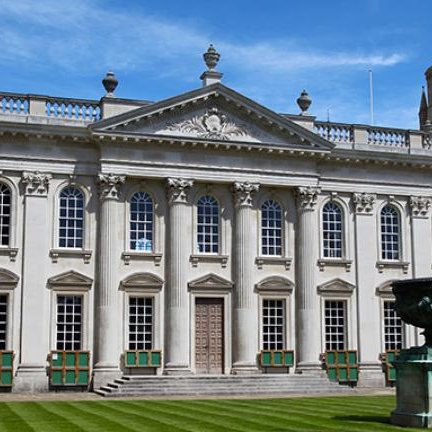
The University of Cambridge and Imperial College London will introduce new admissions tests for science, engineering and mathematics based degree courses as part of a joint venture between the two education establishments.

The pioneering founder of a Cambridge company that specialises in location-tracking technology has been recognised in the New Year Honours list.

National Highways has chosen three artificial intelligence companies, including two from Cambridge, to take part in a trial to investigate how the technology can be used to help improve roadworks projects.

A planning application has been submitted for a new science district in Cambridge.

The year 2023 saw artificial intelligence impact our language, a reality highlighted by popular dictionaries’ words of the year.

South Cambridge District Council has unanimously approved a proposal for a new 125,000 sq. ft. next generation life sciences hub in Cambridge.

The Greater Cambridge region’s corporate economy has significantly outperformed the UK average during the year ending in mid-February 2023, a new analysis of official data has revealed.
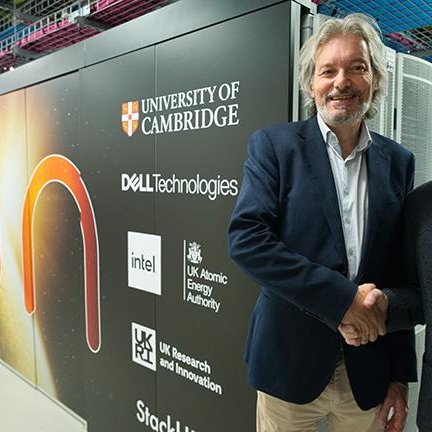
A partnership between Dell, Intel, the University of Cambridge, UK Research and Innovation (UKRI) and the UK Atomic Energy Authority (UKAEA) has resulted in phase one of the UK's fastest artificial intelligence (AI) supercomputer being delivered.
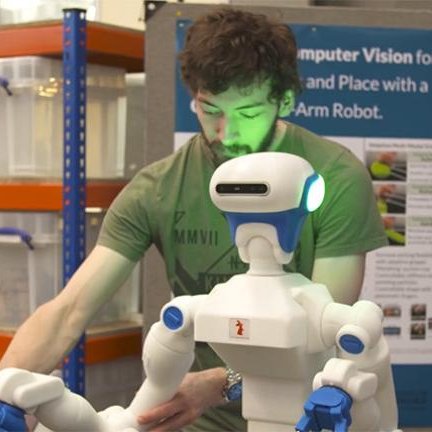
The University of Cambridge and Google have deepened their long-standing artificial intelligence (AI) partnership, with the latter sponsoring a new research centre at the university.

A first of its kind in the world 3D printed post office has opened in Bengaluru, southwest India.
The developer behind a new science district planned on an old landfill site in Cambridge has said the project will create thousands of jobs.