New Five-story Lab and Office Building to Rise at Cambridge Biomedical Campus
A new five-storey laboratory and office building will rise at the Cambridge Biomedical Campus after plans for its construction were approved by councillors.
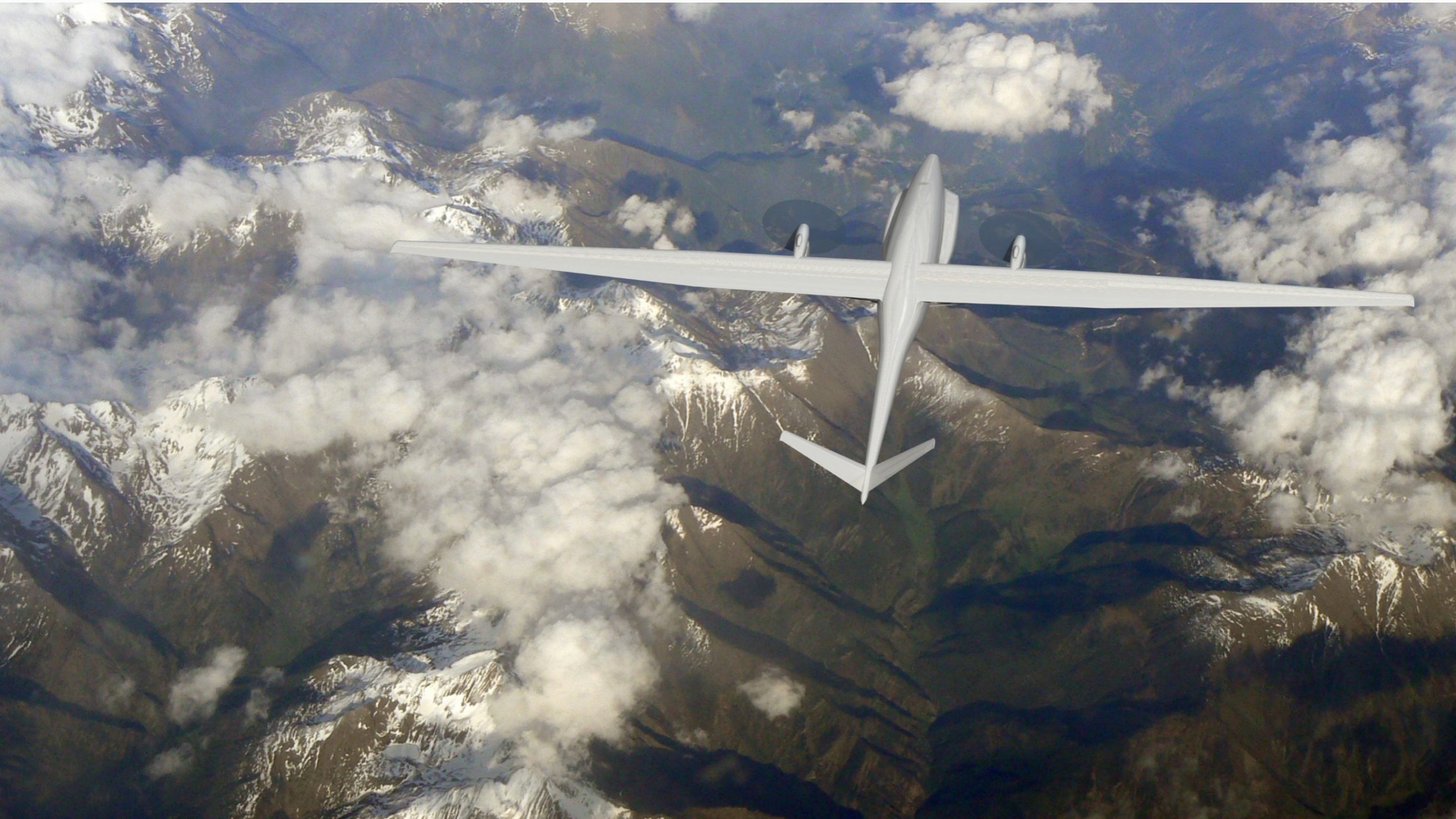
Image credit: Stratospheric Platforms
Cambridge company is looking to provide UK-wide 5G coverage via hydrogen-powered aircraft. If rolled out, the solution could put an end to inconsistent, unreliable internet connectivity in rural and secluded areas.
Stratospheric Platforms (SPL) says it has developed a high-altitude, hydrogen-powered aircraft (technically known as a HAP or High Altitude Platform) which can provide uninterrupted 5G connectivity direct to consumer smart phones across areas as wide as 140km and at the same time, direct broadband connectivity to properties.
Backed by Deutsche Telekom, SPL was launched in 2016 to tackle the wide-area technological challenges facing 5G adoption.
SPL has put a proposal to the government via the Department for Digital, Culture, Media & Sport for complete 5G coverage of the UK with a small fleet of aircraft.
Operating from an airfield such as Prestwick Spaceport, Stratospheric says the HAPs, which are currently at demonstrator level, could provide full geographic ubiquitous telecommunications coverage to the whole of the UK and even large parts of Northern Europe.
The Stratomast HAP system would particularly benefit remote and rural areas that don’t typically get fast, reliable internet connectivity. All would-be customers need to take advantage is a standard mobile phone for mobile connectivity or, for home broadband services, a low-power MiFi device (costing less than £100). The beauty of this setup is that there is no requirement for unsightly, expensive additional infrastructure or towers on the ground. It also removes the need for costly fibre-optic cables to laid across the seabed to islands or rural communities.
For rural businesses such as farming, fishing and tourism, the possibilities are exciting. For example, they could increase their efficiency by being able to use IoT devices anywhere and access big data.
Neil Taylor, business & systems analyst and a co-founder at Stratospheric Platforms, said: “Scotland is a very ready market from our point of view as its population is so low, especially in the Highlands and on the islands.”
“The expectation is that it [the HAP] will stay in the air for between five and nine days – depending on conditions such as wind speed – and has a 30,000km range. The whole idea is that it will get into the stratosphere and then loiter in a 10km circle at 60,000 feet. It can beam out a 5G signal around 50km, depending on the various levels of service. The maximum would be 70km – 30km in a densely populated area.
“We have the platform, 5G array and the aircraft,” concludes Neil. “That’s unique.”

A new five-storey laboratory and office building will rise at the Cambridge Biomedical Campus after plans for its construction were approved by councillors.
According to the World Mosquito Program, nearly 700 million people contract mosquito-borne illnesses each year, causing more than one million deaths.
The holidays are almost upon us and you might be thinking that it’s time to wind down your job hunting activities until at least the New Year. But why!?
The University of Cambridge has announced a five-year agreement with AstraZeneca and GSK to fund a new centre at the university, which aims to use AI to make medical discoveries, accelerate the development of precision medicine and develop new treatments.
Cambridge’s first 5G mobile private network will be constructed at the city’s Science Park, as part of a testbed due to go live in January 2021.
Demand for IT workers in Cambridge is high and that has caused tech salaries in the region to rise to become some of the highest in the whole of the UK. That’s one of the key findings to be revealed in Office for National Statistics (ONS) data compiled by job search engine Adzuna and entrepreneur network Tech Nation.
A new crop science centre, which hopes to sustainably improve farmers’ yields worldwide by translating research, has been opened in Cambridge.
With the telecommunications industry on Earth as competitive as ever, Nokia has announced that it is branching out into a new market, one that still doesn’t boast a single mobile phone tower: the Moon.
Researchers from the University of Cambridge have collaborated with 3D image analysis software company Lume VR Ltd to create Virtual Reality (VR) software that allows scientists to ‘walk’ inside cells.
Amazon is creating a new team at its Cambridge Development Centre to work on research and development of the company’s autonomous electric delivery robots.
A female entrepreneur from Cambridge is one of four winners of the second Women4Climate Tech Challenge 2020.
The human race’s continual quest to advance technologically knows no bounds. But the sad reality is that it often comes at the cost of natural environments. Important habitats destroyed, oceans full of plastic waste, the list goes on…