Ambassador visits Cambridge to boost UK-US innovation ties
The UK Ambassador to the United States visited the University of Cambridge to explore its global leadership in innovation and strengthen transatlantic academic and industrial collaboration.

New figures from CV-Library reveal a striking divergence in the UK’s AI job market, with robotics-related positions surging ahead in pay growth while many traditional AI roles experience steep declines.
The job board analysed data from more than five million vacancies posted between 2023 and 2025 and found that, despite sector growth, average salaries for AI positions fell by 0.5% year-on-year, signalling a competitive and fast-changing employment landscape.
Robotics Software Engineer salaries jumped by an impressive 51.7% over the period, reaching an average of £52,779 – making it the fastest-growing AI role. Principal Data Scientist pay rose by 31.9% to £83,844, while Head of Data Science climbed 30.1% to £91,993. At the very top end, Algorithm Specialists earned the highest average salary at £100,634, though this was accompanied by only a modest 1.7% rise.
In contrast, traditional AI roles recorded steep declines. Senior Data Scientist salaries fell by 27.4% to £85,368, AI Engineer pay dropped 26.8% to £89,780, and Data Science Engineer earnings fell 19.8% to £53,534. Even junior positions saw reductions, with Junior Data Scientist salaries down 12.9%.
CV-Library attributes the shift to an automation boom in sectors such as manufacturing, healthcare and logistics, alongside greater investment in robotics software and a saturation of traditional AI job markets. “Roles such as Robotics Software Engineer and Principal Data Scientist are gaining momentum, driven by automation demands and the need for data-driven business strategies,” a spokesperson said.
With more than 6,000 AI-related vacancies posted since 2023 and an average salary of £65,636, the UK’s AI sector remains a lucrative but increasingly competitive career path. Those who adapt to emerging technologies, particularly robotics, stand to benefit most in the years ahead.
Image credit: Steve Johnson via Unsplash.
Looking for your next technology, science or engineering role? Maybe you’re just starting out in your career? Polytec is here to help you find the perfect position for you. Browse our current vacancies now >>> www.polytec.co.uk/jobs

The UK Ambassador to the United States visited the University of Cambridge to explore its global leadership in innovation and strengthen transatlantic academic and industrial collaboration.

Researchers from the University of Cambridge and University College London (UCL) have developed an innovative, low-cost robotic “skin” that could dramatically enhance a robot’s sense of touch.

Cambridge has been recognised as the most innovative city in the UK relative to its population, according to a newly released report by Dealroom.
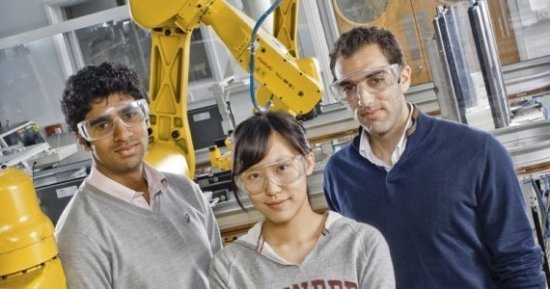
Cambridge’s advanced manufacturing and innovation economy is set for a major uplift following the UK government’s recent trade agreements with India, the United States, and the European Union.
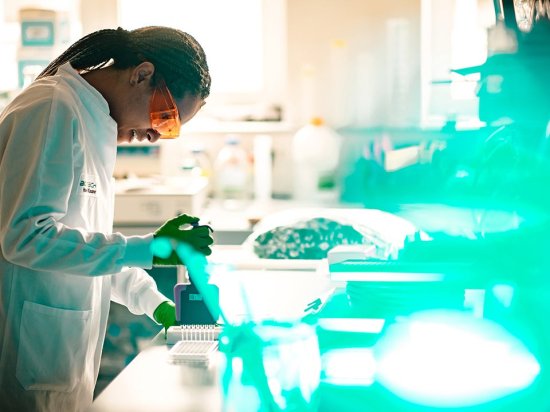
Biopharmaceutical company BioNTech yesterday announced it will invest £1bn in the United Kingdom over the next 10 years, creating hundreds of jobs in London and Cambridge in the process.

Lloyds Bank has partnered with the University of Cambridge to provide artificial intelligence (AI) training to around 300 senior staff.

Cambridge is the UK’s most sustainable city for the second year running, new data has revealed.

Digital technologies are proliferating at such a rate that the scientific systems designed to evaluate their impact on public health cannot keep up, two leading researchers have said.

The University of Cambridge is set to establish a new academic department later this year, aiming to explore how artificial intelligence (AI) can drive economic growth and enhance policymaking.

A new virtual reality (VR) platform has been developed to help people overcome their fear of public speaking.

A venture capital group backed by the University of Cambridge has launched a £100m opportunity fund designed to drive growth among DeepTech and life sciences companies in the region.
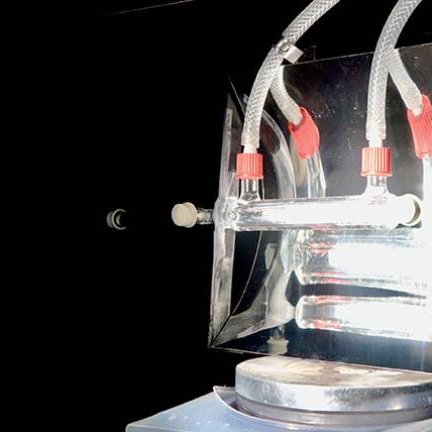
Scientists from the University of Cambridge have created a solar-powered device that converts carbon dioxide (CO2) into sustainable fuel.