Robotic replicas of ancient fish offer insights into the evolution of terrestrial locomotion

In a remarkable intersection of robotics and evolutionary biology, scientists are bringing the ancient world of early vertebrates to life, specifically the fish species thought to be the first to transition from water to land.

Spearheaded by the University of Cambridge, this study leverages robotic technology to replicate the movement and energy demands of these ancient creatures, revealing insights into their skeletal structures, joint functions, and potential locomotive patterns.

By designing robots that mimic these early vertebrates' anatomy and movement, researchers aim to decode how these creatures adapted to new environmental challenges, potentially shedding light on the origins of land-dwelling vertebrates.

The research primarily focuses on analysing the physical mechanics required for these prehistoric fish to navigate shallow waters and eventually move onto land—a significant evolutionary milestone.

By constructing robotic models with flexible joints and fins, scientists test different movement styles, exploring how various forms of locomotion might have emerged and stabilised over time. This approach enables a deeper understanding of the evolutionary pressures and physical adaptations that drove the transition to terrestrial life, offering a unique perspective on vertebrate evolution.

These experiments do more than reconstruct history; they hold promise for practical applications as well. Insights from the robots' movement patterns may aid in developing agile, energy-efficient robots that can navigate diverse environments, from underwater terrains to rugged landscapes. This research exemplifies how studying the past can inform future technological advancements, bridging the gap between evolutionary biology and robotics in innovative ways.

The study is a testament to the power of interdisciplinary approaches in science, combining engineering, biology, and palaeontology to explore one of the most transformative periods in evolutionary history. As scientists refine these robotic models, we move closer to understanding how early vertebrates conquered land, paving the way for the diverse ecosystems we see today.

Lead author Dr Michael Ishida from Cambridge’s Department of Engineering, said: “Since fossil evidence is limited, we have an incomplete picture of how ancient life made the transition to land.

“Palaeontologists examine ancient fossils for clues about the structure of hip and pelvic joints, but there are limits to what we can learn from fossils alone.

“That’s where robots can come in, helping us fill gaps in the research, particularly when studying major shifts in how vertebrates moved.”


paleo-robots-883x432.jpg


Artist drawings of palaeo-inspired robots. Credit: University of Cambridge


Looking for your next technology, science or engineering role? Maybe you’re just starting out in your career? Polytec is here to help you find the perfect position for you. Browse our current vacancies now >>> www.polytec.co.uk/jobs
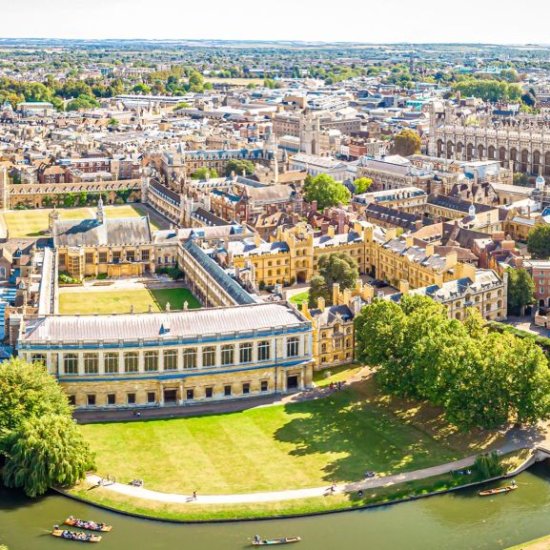

Aerial-view-of-Cambridge_2130x1200-2100x1183.jpg

Cambridge once again named as most intensive science and technological cluster in the world

October 8, 2024

Cambridge has once again been named as the most intensive science and technological cluster in the world, according to a new report ranking innovation around the globe.

BGO-sciencedistrict.jpg

New 23-acre central Cambridge science district gets go ahead

September 23, 2024

A new, world-class 23-acre urban science district in central Cambridge has been given the go ahead by authorities.

Peterborough_Cathedral_1.jpg

Cambridgeshire city named among most underrated places for young people to live

September 17, 2024

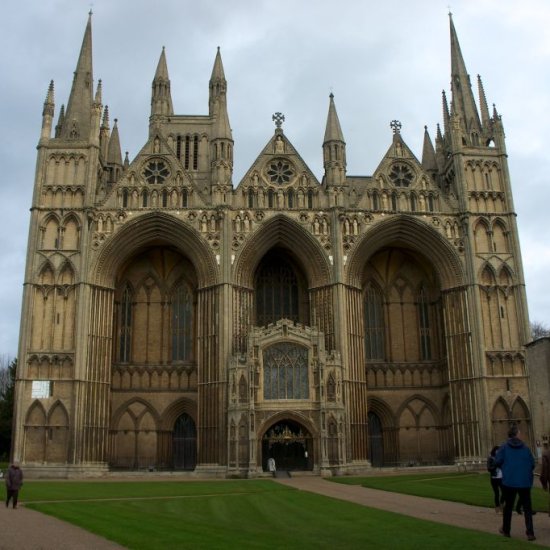
A Cambridgeshire city has been named as one of the most underrated places for young people to live in the UK.

Cesare.jpg

Cambridge student builds nuclear reactor for college project

August 27, 2024

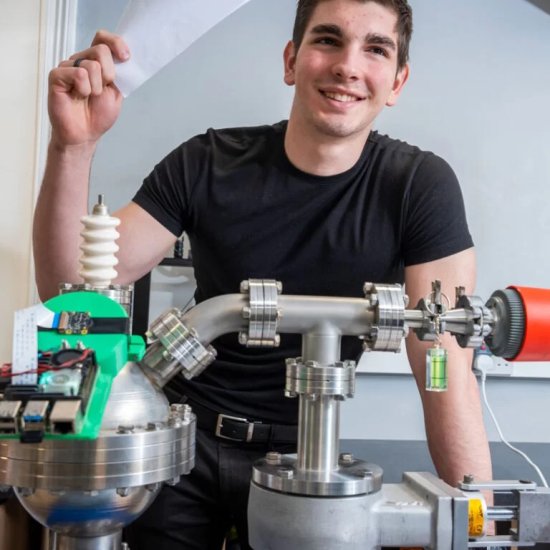
A student from Cambridge has successfully built a nuclear reactor as part of his college course.

Sigourney-Bonner-co-founder-of-Black-in-Cancer.-Image-Lloyd-Mann.jpg

Black in Cancer launched at Cambridge University to drive change in diversity

August 23, 2024

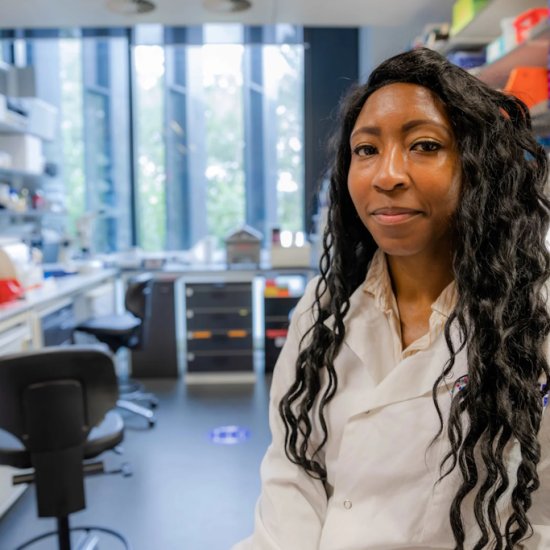
A new initiative has been launched by a University of Cambridge scientist to drive a change in diversity and help create a cancer research sector that better represents the wider population.

broken_tech.jpg

Cambridge Centre for Computing History awarded two separate grants totalling nearly £100k

August 19, 2024

The Centre for Computing History in Cambridge has been awarded two separate grants in recent weeks totalling almost £100,000.

1024px-Bridge_of_Sighs-_St_Johns_College-_Cambridge-_UK_-_Diliff.jpg

Government urged to make Oxford-Cambridge region the 'crown jewel' of European innovation

July 26, 2024

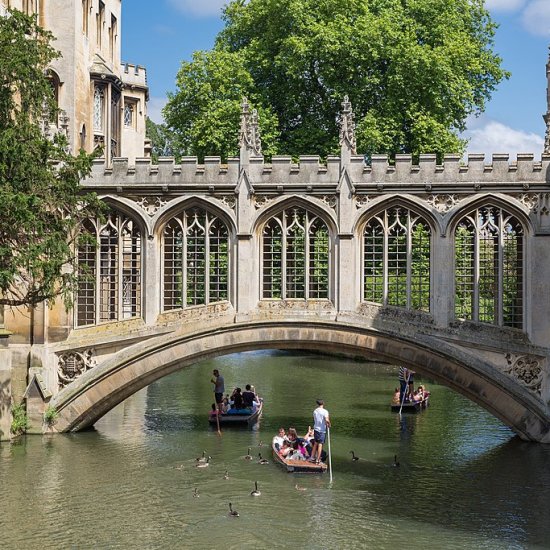
Industry leaders and prominent companies are calling on the government to make the Oxford-Cambridge region the “crown jewel” of science and innovation in Europe.

3462938929_22b75204a4_c.jpg

Stephen Hawking archive opens at Cambridge University

July 22, 2024

Having been fully catalogued, Stephen Hawking’s scientific and personal archive is now available to the public at Cambridge University Library.

OWGDDXGLXPEWVNK6K3QF.jpg

Cambridge Science Centre's new home celebrated with VIP launch

July 17, 2024

Cambridge Science Centre’s new home on Cambridge Science Park was the subject of a celebratory VIP launch event earlier this month.

ThirdThumb.jpg

Cambridge researchers develop robotic 'Third Thumb' to boost productivity

June 26, 2024

Researchers from the University of Cambridge have developed a controllable robotic extra thumb which is designed to enhance productivity – and tests show people have no trouble using it.

Bowling-machine.png

Historic 1900s bowling machine recreated by Cambridge engineers

June 25, 2024

Engineers from the University of Cambridge have recreated an historic bowling machine which bested an Australian international cricketer four times more than 100 years ago.

Cambridge-Science-Centre.jpg

Cambridge Science Centre moves to new home

June 18, 2024

Cambridge Science Centre has moved to a new state-of-the-art home on Cambridge Science Park, through a partnership with park owners, Trinity College.

Follow Us

Contact