Ambassador visits Cambridge to boost UK-US innovation ties
The UK Ambassador to the United States visited the University of Cambridge to explore its global leadership in innovation and strengthen transatlantic academic and industrial collaboration.

Image credit: Tung Nguyen from Pixabay
The British public is divided over how artificial intelligence should be used in schools, with strong support for its role in helping teachers with administrative work but widespread opposition to its use for marking.
A new survey of 2,221 UK adults, commissioned by Cambridge University Press & Assessment, found that nearly six in ten (59%) back teachers using AI to complete time‑consuming admin tasks such as lesson planning, while 31% are against it. In contrast, almost two‑thirds (62%) oppose the use of AI to mark coursework, with just over a quarter (27%) in favour.
The findings come shortly after the Department for Education issued new guidance on generative AI in schools and amid reports from The Sutton Trust and Teacher Tapp highlighting patchy uptake of the technology in classrooms.
The survey revealed overwhelming public resistance to students using AI to complete coursework in full, with 89% rejecting the idea and only 5% supporting it. Views were more balanced when it came to students using AI tools to improve punctuation and grammar, with 46% in favour and 44% opposed.
Reducing or removing coursework completed at home to prevent misuse of AI was seen as the best option by just 16% of respondents. However, more than half (52%) believe teaching the responsible use of AI should be part of the secondary school curriculum, compared with only 34% who think it should be introduced at primary level.
The top concerns about AI in education identified by respondents were inaccuracies in AI‑generated information and a loss of human interaction in teaching and learning.
Jill Duffy, chief executive of Cambridge’s UK exam board OCR, said: “AI is already in our schools and is not going away. A coordinated national strategy, with funding to ensure no schools are left behind, will build public confidence in its transformational potential.
The public is clear that coursework is too important to lose, even in the age of AI. It enables us to test different skills, and to reduce the intense volume of exams taken at 16. These findings should be seen as a challenge to all of us in education: find a way to adapt coursework so it is fit for the AI century.”
The survey also found notable differences between men and women. Two‑thirds of women (67%) oppose the use of AI for marking coursework, compared with 57% of men. Women were also more likely than men to reject adding responsible AI use to the secondary school curriculum (40% versus 29%).
Looking for your next technology, science or engineering role? Maybe you’re just starting out in your career? Polytec is here to help you find the perfect position for you. Browse our current vacancies now >>> www.polytec.co.uk/jobs

The UK Ambassador to the United States visited the University of Cambridge to explore its global leadership in innovation and strengthen transatlantic academic and industrial collaboration.

Researchers from the University of Cambridge and University College London (UCL) have developed an innovative, low-cost robotic “skin” that could dramatically enhance a robot’s sense of touch.

Cambridge has been recognised as the most innovative city in the UK relative to its population, according to a newly released report by Dealroom.
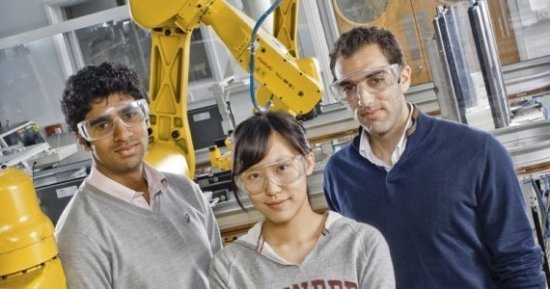
Cambridge’s advanced manufacturing and innovation economy is set for a major uplift following the UK government’s recent trade agreements with India, the United States, and the European Union.

Biopharmaceutical company BioNTech yesterday announced it will invest £1bn in the United Kingdom over the next 10 years, creating hundreds of jobs in London and Cambridge in the process.

Lloyds Bank has partnered with the University of Cambridge to provide artificial intelligence (AI) training to around 300 senior staff.

Cambridge is the UK’s most sustainable city for the second year running, new data has revealed.
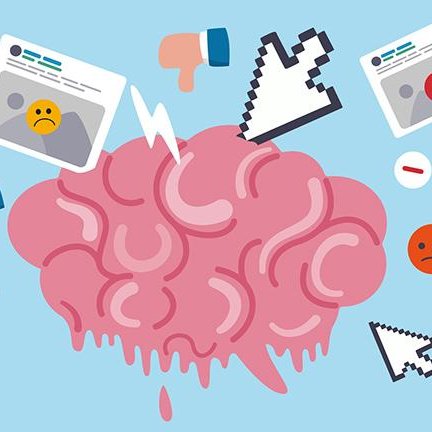
Digital technologies are proliferating at such a rate that the scientific systems designed to evaluate their impact on public health cannot keep up, two leading researchers have said.

The University of Cambridge is set to establish a new academic department later this year, aiming to explore how artificial intelligence (AI) can drive economic growth and enhance policymaking.

A new virtual reality (VR) platform has been developed to help people overcome their fear of public speaking.

A venture capital group backed by the University of Cambridge has launched a £100m opportunity fund designed to drive growth among DeepTech and life sciences companies in the region.

Scientists from the University of Cambridge have created a solar-powered device that converts carbon dioxide (CO2) into sustainable fuel.