Ambassador visits Cambridge to boost UK-US innovation ties
The UK Ambassador to the United States visited the University of Cambridge to explore its global leadership in innovation and strengthen transatlantic academic and industrial collaboration.

Oxford and Cambridge universities have each received a £6.25m donation from an anonymous benefactor to expand outreach and support for disadvantaged students in science, technology, engineering and mathematics (STEM). The £12.5m joint gift will fund new and existing initiatives aimed at raising attainment, improving access and increasing the number of underrepresented students progressing into STEM degrees.
Although administered separately, the programmes at the two universities will share resources, online platforms and academic tutors to maximise their combined impact. The goal is to build a joined-up support system for students aged 14 through to university, tackling persistent gaps in opportunity and achievement.
At Oxford, the funding will allow the Mathematical, Physical and Life Sciences Division to launch a targeted GCSE mathematics mentoring programme, designed to support students from low socio-economic backgrounds. Participants will receive weekly tutorials and attend residential sessions at Oxford, with the aim of boosting confidence and take-up of maths and further maths at A-level. The programme will support approximately 850 students over four years.
The gift will also expand Oxford’s online COMPOS outreach programme, which helps 14–19-year-olds develop deeper skills in physics and maths. The platform, running since 2021, will now increase capacity from 500 to 1,200 students annually and broaden its subject offering to include chemistry, biology, computer science and pure mathematics. In addition, Oxford’s bridging programme for incoming undergraduates will be scaled up, with more places on its residential week and extended online academic preparation throughout the transition into university life.
Cambridge will use its share of the donation to secure two major STEM access initiatives through to 2031. Isaac Physics, a free online learning platform developed by Cambridge academics, allows teachers to assign structured problem sets across physics, maths, chemistry and biology. It is currently used by more than 700,000 students and educators worldwide.
STEM SMART, which builds on Isaac Physics, supplements weekly assignments with live tutorials and mentoring by university students. The most engaged pupils are invited to attend a four-day residential at a Cambridge college. Independent evaluations have found the programme significantly boosts A-level performance and university admissions among disadvantaged students.
Leaders at both universities have hailed the gift as a transformational opportunity to reach more students and build a stronger, more inclusive pipeline into STEM. By combining high-quality resources with targeted mentoring and immersive experiences, the initiatives aim to unlock potential and address the structural barriers that still limit access to science and technology careers.
Looking for your next technology, science or engineering role? Maybe you’re just starting out in your career? Polytec is here to help you find the perfect position for you. Browse our current vacancies now >>> www.polytec.co.uk/jobs
Image credit: Xi Wang on Unsplash

The UK Ambassador to the United States visited the University of Cambridge to explore its global leadership in innovation and strengthen transatlantic academic and industrial collaboration.

Researchers from the University of Cambridge and University College London (UCL) have developed an innovative, low-cost robotic “skin” that could dramatically enhance a robot’s sense of touch.

Cambridge has been recognised as the most innovative city in the UK relative to its population, according to a newly released report by Dealroom.
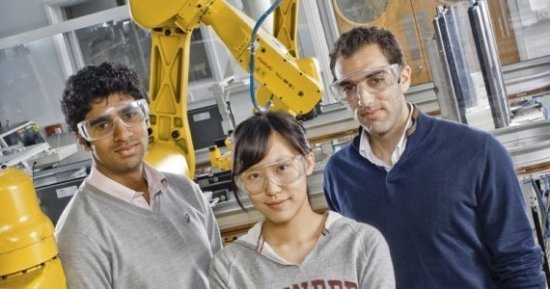
Cambridge’s advanced manufacturing and innovation economy is set for a major uplift following the UK government’s recent trade agreements with India, the United States, and the European Union.
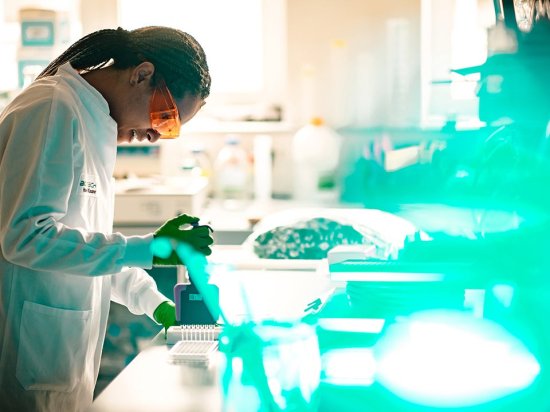
Biopharmaceutical company BioNTech yesterday announced it will invest £1bn in the United Kingdom over the next 10 years, creating hundreds of jobs in London and Cambridge in the process.

Lloyds Bank has partnered with the University of Cambridge to provide artificial intelligence (AI) training to around 300 senior staff.

Cambridge is the UK’s most sustainable city for the second year running, new data has revealed.

Digital technologies are proliferating at such a rate that the scientific systems designed to evaluate their impact on public health cannot keep up, two leading researchers have said.

The University of Cambridge is set to establish a new academic department later this year, aiming to explore how artificial intelligence (AI) can drive economic growth and enhance policymaking.

A new virtual reality (VR) platform has been developed to help people overcome their fear of public speaking.

A venture capital group backed by the University of Cambridge has launched a £100m opportunity fund designed to drive growth among DeepTech and life sciences companies in the region.
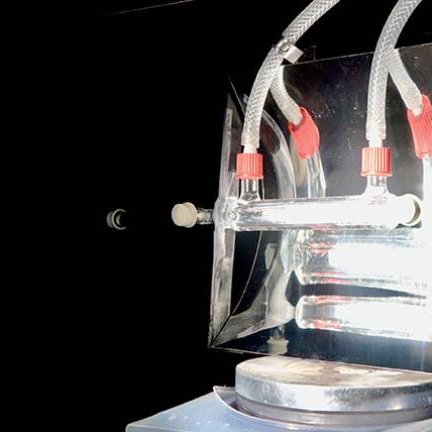
Scientists from the University of Cambridge have created a solar-powered device that converts carbon dioxide (CO2) into sustainable fuel.