Cambridge remains world's most intensive science and technology cluster
The city of Cambridge is still the world’s most intensive science and technology cluster, a new report has revealed.
While the year 2023 will be remembered for a lot of things, the impact of artificial intelligence (AI) on our lives will rank pretty near the top. But AI hasn’t just transformed the way we shop or how we conduct research (ChatGPT, anyone?), it’s also crept its way into our language, a reality highlighted by popular dictionaries’ words of the year.
Indeed, Cambridge Dictionary chose “hallucinate” as its word of the year, adding a new definition born from how some AI tools use false, misleading or even made-up ‘facts’.
The new, additional definition reads: 'When an artificial intelligence (= a computer system that has some of the qualities that the human brain has, such as the ability to produce language in a way that seems human) hallucinates, it produces false information.'
Wendalyn Nichols, Cambridge Dictionary’s Publishing Manager, said: “The fact that AIs can ‘hallucinate’ reminds us that humans still need to bring their critical thinking skills to the use of these tools. AIs are fantastic at churning through huge amounts of data to extract specific information and consolidate it. But the more original you ask them to be, the likelier they are to go astray.
“At their best, large language models can only be as reliable as their training data. Human expertise is arguably more important – and sought after – than ever, to create the authoritative and up-to-date information that LLMs can be trained on.”
Meanwhile, Merriam-Webster opted for ‘authentic’, stating: “With the rise of artificial intelligence—and its impact on deepfake videos, actors’ contracts, academic honesty, and a vast number of other topics—the line between “real” and “fake” has become increasingly blurred”.
Finally, while Oxford chose 'rizz' as its word of the year, another AI-related term came runner-up: ‘prompt’. Oxford’s newly added definition of ‘prompt’ reads: ‘an instruction given to an artificial intelligence program, algorithm, etc., which determines or influences the content it generates’.
Looking for your next technology, science or engineering role? Maybe you’re just starting out in your career? Polytec is here to help you find the perfect position for you. Browse our current vacancies now >>> www.polytec.co.uk/jobs

Image by Gerd Altmann from Pixabay
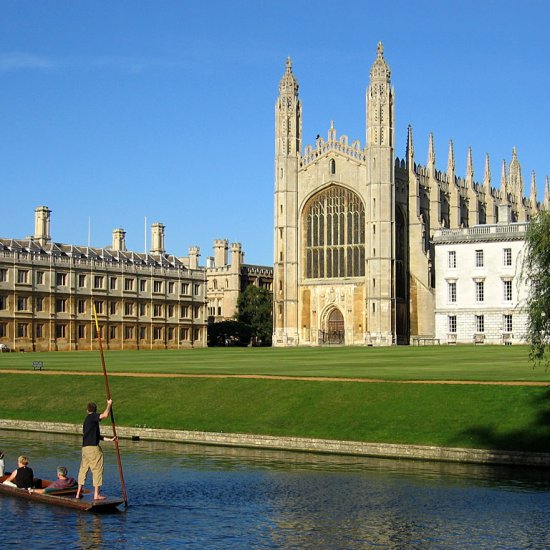
The city of Cambridge is still the world’s most intensive science and technology cluster, a new report has revealed.
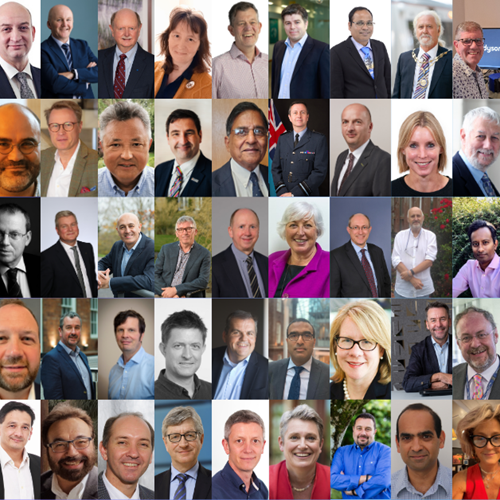
The Royal Academy of Engineering has elected 73 leading figures from the field of engineering and technology into its fellowship.

Work has begun on the new South Cambridge Science Centre (SCSC) at a brownfield site in Sawston, south of the city.

Earlier this month, the UK’s new Semiconductor Advisory Panel met at Imperial College London and members from several Cambridge chip firms were among those present.

A significant proportion of UK employers are turning to counteroffers to retain key staff amid ongoing skills shortages, new research from The Chartered Institute of Personnel and Development (CIPD) shows.

Adopting robots has a U-shaped effect on a company’s profits, driving them down to start with before they rebound and rise, according to new research from the University of Cambridge.
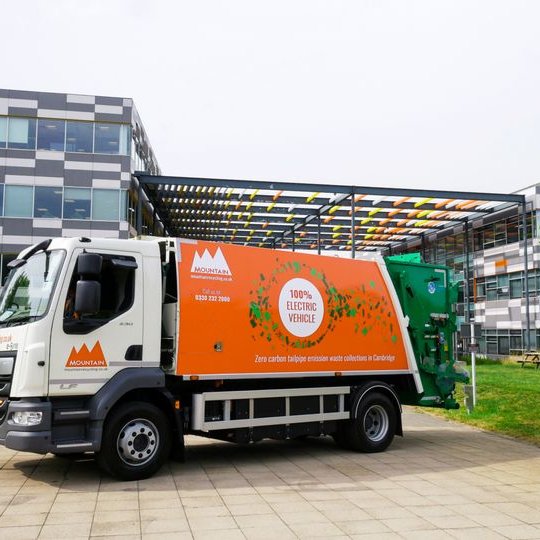
The University of Cambridge is looking to boost the amount of rubbish that gets recycled on campus by introducing new bins, 3D scanners and miles of conveyor belts.
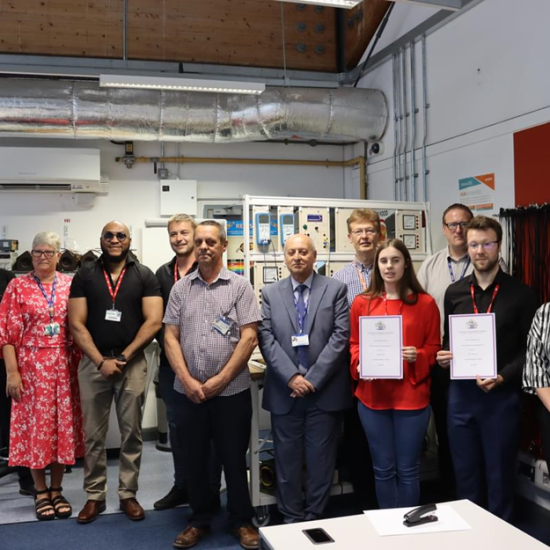
Four students from Cambridge Regional College (CRC) have had their talents recognised by The Institute of Engineering and Technology (IET)’s Cambridge Network.

In a national first, researchers from the University of Cambridge have helped develop a 3D-printed, smart piece of concrete infrastructure for a National Highways project.

A teenager from Cambridge has won a national award in the prestigious Big Bang UK Young Scientists & Engineers Competition.

Construction has started on Cambridge South, Cambridge’s new railway station, which will serve the city’s Biomedical Campus.
Cambridge has been named one of the most desirable places to live in the UK, in a list recently published by The Telegraph.