Cambridge remains world's most intensive science and technology cluster
The city of Cambridge is still the world’s most intensive science and technology cluster, a new report has revealed.

Elisa Meschini, Greater Cambridge Partnership Executive Board Member, and Cambridgeshire County Councillor.
The Greater Cambridge region’s corporate economy has significantly outperformed the UK average during the year ending in mid-February 2023, a new analysis of official data has revealed.
According to Cambridge Ahead and the Greater Cambridge Partnership, corporate employment growth in the Greater Cambridge area surged from 6.0% in 2021-22 to an even more impressive 8.5% in 2022-23.
The analysis also revealed how the "Knowledge Intensive" (KI) sectors, including life sciences, IT, and high-tech manufacturing, play a pivotal role in Greater Cambridge's ongoing success.
Non-KI sectors, such as retail, transport and construction, also contributed to the overall employment surge, with a higher growth rate of 4.5% in 2022-23, compared to 3.4% in 2021-22.
The analysis highlights Greater Cambridge's corporate economic strength and adaptability, with a remarkable trajectory of growth and continued post-pandemic recovery in various key sectors, despite concerns nationally about a potential UK recession.
Dan Thorp, CEO, Cambridge Ahead, said: “These figures tell a story of a strong economy that brings more and more high quality jobs to the city region every year and, given the sectors this growth is coming from, is a jewel in the crown of the overall UK economy.
"Since the pandemic, it has been the KI sectors keeping our economy in overall positive employment growth, whilst non KI was impacted more deeply. Now we see evidence of an important shift, almost all sectors are seeing positive growth and there is stronger whole-economy momentum building.
“General forecasting for the UK can fail to fully account for areas which are performing unusually strongly, like Greater Cambridge. This leads to inadequate outcomes on issues such as transport, housing, utilities, education and skills where the baseline data is not reflective of the growth on the ground. This new localised employment growth data should now be put to use as a primary factor in the assessment of Greater Cambridge’s infrastructure needs in order to support our inclusive, sustainable growth ambitions and the quality of life needs of the workforce”
Greater Cambridge Partnership Executive Board Member, and Cambridgeshire County Councillor, Elisa Meschini, said: “The continued growth of the Greater Cambridge job market is a reflection of how strong we are as a place – leading the resurgence of the UK economy. This research shows that it is not just in our traditional areas of strength like life sciences and high-tech that employment is growing but also in the supporting sectors such as retail and construction. This is providing the balance of skills, experience and opportunities for people who live here now or who wish to relocate.
“As we digest these figures it is key to understand why all sectors are firing up – we believe it is because Cambridge is becoming the national and international centre we hoped it would become but we need to investigate further. The big challenge is clear – how do we sustain this growth and ensure that people have the homes, necessary transport and education opportunities to seize the roles which are being created. This is something we all must work together on.”
The analysis was produced by the Centre for Business Research (CBR) at the University of Cambridge and sponsored by the Greater Cambridge Partnership and Cambridge Ahead.
The database methodology detailing the types of companies included, period covered, data collected and sector classifications is available here: https://cambridgeahead.co.uk/media/2234/cbr-database-methodology-2023.pdf
Looking for your next technology, science or engineering role? Maybe you’re just starting out in your career? Polytec is here to help you find the perfect position for you. Browse our current vacancies now >>> www.polytec.co.uk/jobs
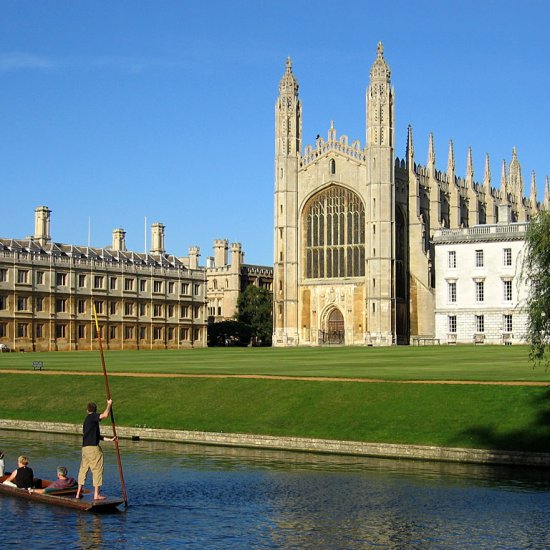
The city of Cambridge is still the world’s most intensive science and technology cluster, a new report has revealed.
The Royal Academy of Engineering has elected 73 leading figures from the field of engineering and technology into its fellowship.

Work has begun on the new South Cambridge Science Centre (SCSC) at a brownfield site in Sawston, south of the city.

Earlier this month, the UK’s new Semiconductor Advisory Panel met at Imperial College London and members from several Cambridge chip firms were among those present.

A significant proportion of UK employers are turning to counteroffers to retain key staff amid ongoing skills shortages, new research from The Chartered Institute of Personnel and Development (CIPD) shows.

Adopting robots has a U-shaped effect on a company’s profits, driving them down to start with before they rebound and rise, according to new research from the University of Cambridge.
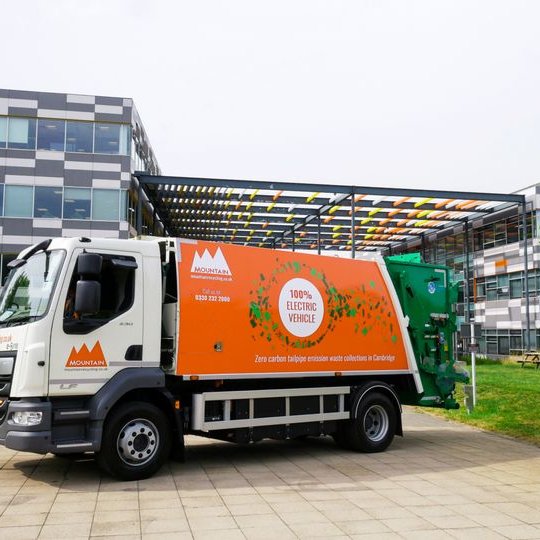
The University of Cambridge is looking to boost the amount of rubbish that gets recycled on campus by introducing new bins, 3D scanners and miles of conveyor belts.
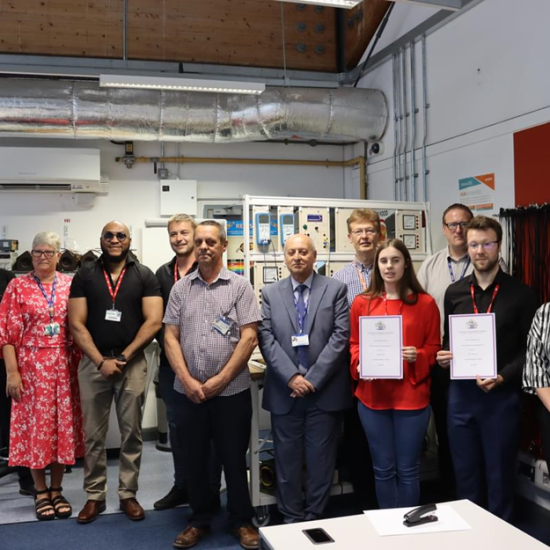
Four students from Cambridge Regional College (CRC) have had their talents recognised by The Institute of Engineering and Technology (IET)’s Cambridge Network.

In a national first, researchers from the University of Cambridge have helped develop a 3D-printed, smart piece of concrete infrastructure for a National Highways project.

A teenager from Cambridge has won a national award in the prestigious Big Bang UK Young Scientists & Engineers Competition.

Construction has started on Cambridge South, Cambridge’s new railway station, which will serve the city’s Biomedical Campus.
Cambridge has been named one of the most desirable places to live in the UK, in a list recently published by The Telegraph.