Government revives plans for Oxford-Cambridge Arc
The UK government has vowed to boost the economy by up to £78bn by reviving plans to deliver the Oxford-Cambridge Arc.
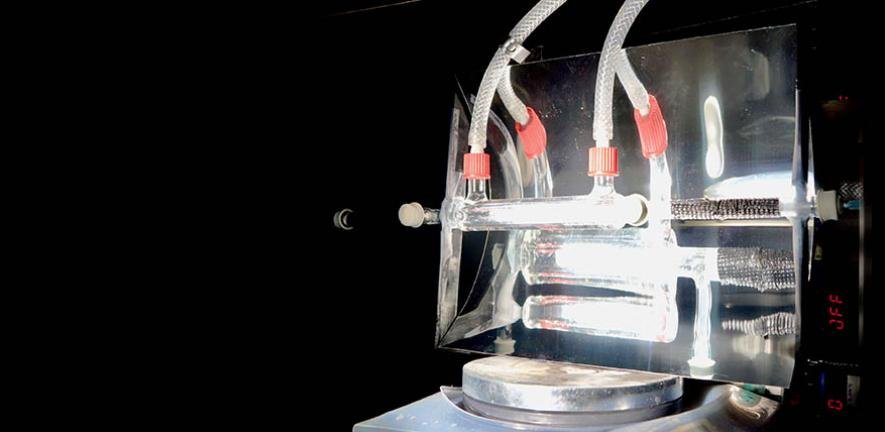
Image credit: University of Cambridge
Scientists from the University of Cambridge have created a solar-powered device that converts carbon dioxide (CO2) into sustainable fuel.
The breakthrough reactor works by capturing CO2 from the atmosphere and converts it into syngas: a key intermediate in the production of many chemicals and pharmaceuticals. Until now, similar carbon capture technologies have needed fossil fuels to power them, unlike the Cambridge device which harnesses the power of the Sun.
“Aside from the expense and the energy intensity, Carbon Capture and Storage (CCS) provides an excuse to carry on burning fossil fuels, which is what caused the climate crisis in the first place,” said Professor Erwin Reisner, who led the research. “CCS is also a non-circular process, since the pressurised CO2 is, at best, stored underground indefinitely, where it’s of no use to anyone.”
The researchers are currently working on converting the solar syngas into liquid fuels, which could be used to power cars, planes and more – without adding more CO2 to the atmosphere.
The team says its device is much easier to scale up than earlier solar-powered devices.
“Instead of continuing to dig up and burn fossil fuels to produce the products we have come to rely on, we can get all the CO2 we need directly from the air and reuse it,” said Reisner. “We can build a circular, sustainable economy – if we have the political will to do it.”
CCS has been touted as a possible solution to the climate crisis, and has recently received £22bn in funding from the UK government.
The results of the Cambridge team’s solar-powered device are reported in the journal Nature Energy.
Looking for your next technology, science or engineering role? Maybe you’re just starting out in your career? Polytec is here to help you find the perfect position for you. Browse our current vacancies now >>> www.polytec.co.uk/jobs

The UK government has vowed to boost the economy by up to £78bn by reviving plans to deliver the Oxford-Cambridge Arc.

The British Antarctic Society (BAS) is looking for people to fill a number of different roles at its research stations in Antarctica.
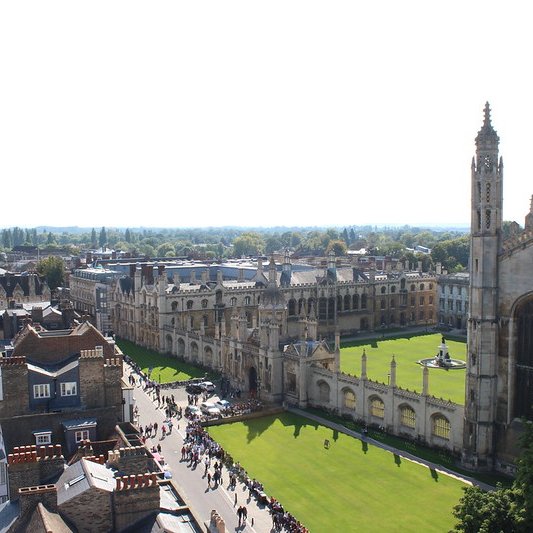
Cambridge has topped a list of fastest growing cities in the UK by population growth.
An open letter to the government from leaders across Cambridge highlights the role that the Greater Cambridge region can play in driving national economic growth.

To stand out in 2025, engineering and technology candidates must adopt cutting-edge strategies to update their CVs, optimise LinkedIn profiles and build compelling personal brands.

A manufacturer of hygiene products has taken to printing job advertisements on toilet paper in an attempt to attract more graduate engineers.

Cambridge has been named in a list of the most beautiful places to visit in England.

The Cambridge Dictionary has unveiled its Word of the Year for 2024.

Cambridge and Greater Manchester have strengthened their strategic partnership announced in 2023 with the opening of a new innovation hub earlier this month.

In a remarkable intersection of robotics and evolutionary biology, scientists are bringing the ancient world of early vertebrates to life, specifically the fish species thought to be the first to transition from water to land.

A landmark £1.1bn investment in Stansted Airport will create more than 5,000 jobs.
The University of Cambridge is seeking £15m from the Chancellor of the Exchequer to kick-start a new science innovation hub, one which will rival similar schemes in France and the United States.