Government revives plans for Oxford-Cambridge Arc
The UK government has vowed to boost the economy by up to £78bn by reviving plans to deliver the Oxford-Cambridge Arc.

The University of Cambridge is set to establish a new academic department later this year, aiming to explore how artificial intelligence (AI) can drive economic growth and enhance policymaking. Named The Bennett School of Public Policy, it marks the university’s first major new department of the century.
With research priorities spanning both the private and public sectors, the school will focus on harnessing AI to improve economic and governmental processes. Vice-Chancellor Prof. Deborah Prentice emphasized that the initiative would integrate expertise from social, physical, and medical sciences to address urgent policy challenges.
This new direction builds on Cambridge’s 2023 commitment to studying AI’s potential and risks. Leading the effort, Dame Diane Coyle, Bennett Professor of Public Policy, stressed the need for interdisciplinary policymaking. “The era of making policy in silos, where an issue is either just an education or an economy problem, for example, needs to be put behind us,” she stated.
One of the school's key objectives is equipping UK and European policymakers with the necessary skills to navigate AI-driven governance. Researchers are already investigating AI adoption in business and collaborating with the Civil Service to refine AI workflows. Additionally, efforts are underway to improve coordination among UK mayors and regional leaders.
Michael Kenny, professor of public policy, highlighted the centre’s mission to foster “tech-savvy” policymakers who understand the intersection of AI, economics, and sustainability. He noted that the school’s location in Cambridge would facilitate collaboration across various disciplines, from quantum computing to sustainable economics.
Beyond AI, the Bennett School will also contribute to ongoing research on reforming government structures to address geographical inequality. Its launch signals a forward-thinking approach to policy development in an era of rapid technological change.
Image credit: Pete Linforth from Pixabay
Looking for your next technology, science or engineering role? Maybe you’re just starting out in your career? Polytec is here to help you find the perfect position for you. Browse our current vacancies now >>> www.polytec.co.uk/jobs

The UK government has vowed to boost the economy by up to £78bn by reviving plans to deliver the Oxford-Cambridge Arc.

The British Antarctic Society (BAS) is looking for people to fill a number of different roles at its research stations in Antarctica.
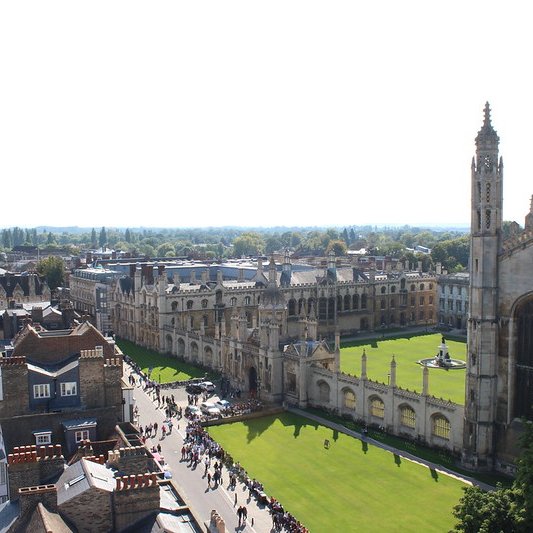
Cambridge has topped a list of fastest growing cities in the UK by population growth.
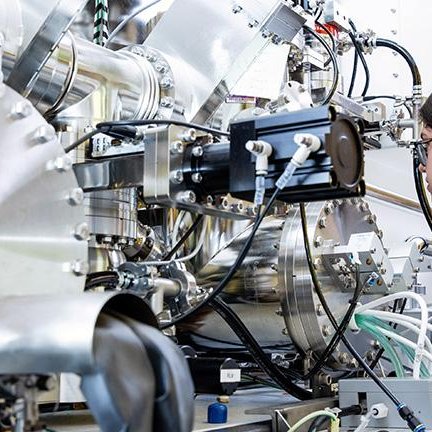
An open letter to the government from leaders across Cambridge highlights the role that the Greater Cambridge region can play in driving national economic growth.
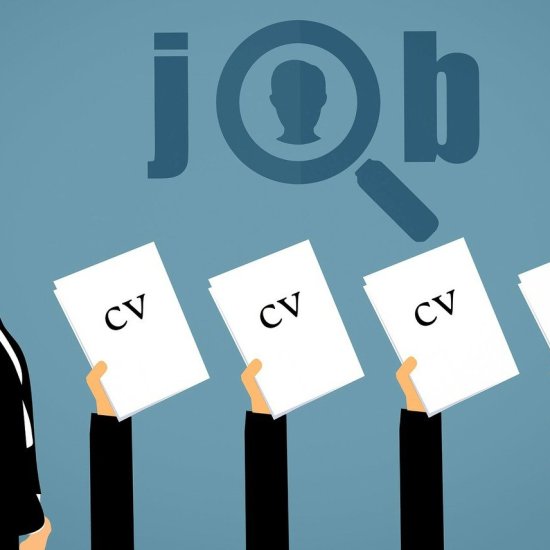
To stand out in 2025, engineering and technology candidates must adopt cutting-edge strategies to update their CVs, optimise LinkedIn profiles and build compelling personal brands.

A manufacturer of hygiene products has taken to printing job advertisements on toilet paper in an attempt to attract more graduate engineers.

Cambridge has been named in a list of the most beautiful places to visit in England.

The Cambridge Dictionary has unveiled its Word of the Year for 2024.

Cambridge and Greater Manchester have strengthened their strategic partnership announced in 2023 with the opening of a new innovation hub earlier this month.

In a remarkable intersection of robotics and evolutionary biology, scientists are bringing the ancient world of early vertebrates to life, specifically the fish species thought to be the first to transition from water to land.

A landmark £1.1bn investment in Stansted Airport will create more than 5,000 jobs.
The University of Cambridge is seeking £15m from the Chancellor of the Exchequer to kick-start a new science innovation hub, one which will rival similar schemes in France and the United States.