Cambridge remains world's most intensive science and technology cluster
The city of Cambridge is still the world’s most intensive science and technology cluster, a new report has revealed.
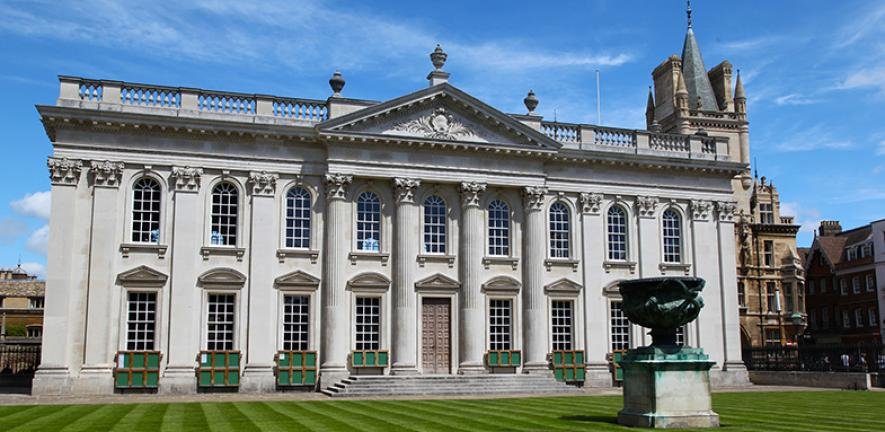
Senate House at the University of Cambridge, licensed under a Creative Commons Attribution-NonCommercial-ShareAlike 4.0 International License
The University of Cambridge and Imperial College London will introduce new admissions tests for science, engineering and mathematics based degree courses as part of a joint venture between the two education establishments.
The tests, which will be delivered by Pearson VUE, are designed to both improve student experience and help universities fairly assess the skills of the brightest applicants for highly competitive undergraduate courses.
Cambridge and Imperial will provide two sets of tests: The Engineering and Science Admissions Test (ESAT) and the Test of Mathematics for University Admission (TMUA).
The ESAT will be used for Engineering, Natural Sciences, Chemical Engineering and Biotechnology degree programmes, as well as Veterinary Medicine at Cambridge, and Physics and most Engineering degrees at Imperial.
The TMUA will be used for degree programmes in Economics and Computer Science at Cambridge, and both the Economics, Finance and Data Science and Computing degrees at Imperial.
A number of other UK universities will also use the TMUA for assessing applications for mathematics based courses.
Mike Nicholson, Director of Recruitment, Admissions and Participation at Cambridge said “We are delighted to be able to provide computer based admissions tests from 2024, and in locations that take the burden off teachers and schools to act as test centres.”
Lizzie Burrows, Director of Marketing, Recruitment and Admissions at Imperial said “The applicant experience is at the heart of our ambitions. With the number of applications expected to continue to rise over coming years, universities need to find ways to fairly select the best candidates while minimising the burden on our applicants.”
Matthew Poyiadgi, Vice President EMEA and Asia at Pearson VUE, commented “As academic settings and admissions programmes continue to evolve in an increasingly digital world, computer-based assessments drive greater efficiencies. We look forward to collaborating with Imperial and Cambridge on this transition and supporting applicants to these world-leading universities in proving their potential.’’
Looking for your next technology, science or engineering role? Maybe you’re just starting out in your career? Polytec is here to help you find the perfect position for you. Browse our current vacancies now >>> www.polytec.co.uk/jobs
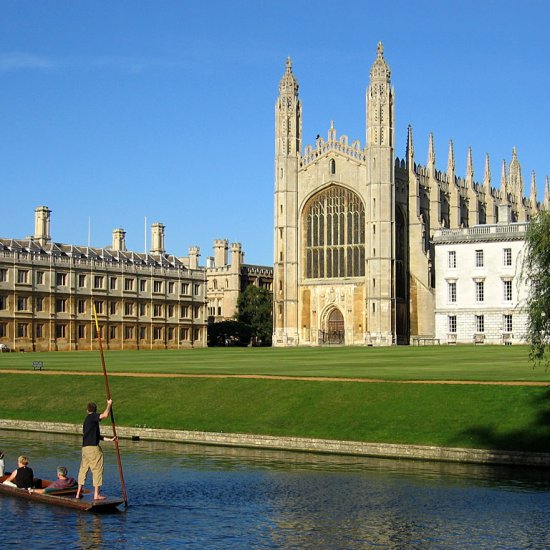
The city of Cambridge is still the world’s most intensive science and technology cluster, a new report has revealed.

The Royal Academy of Engineering has elected 73 leading figures from the field of engineering and technology into its fellowship.

Work has begun on the new South Cambridge Science Centre (SCSC) at a brownfield site in Sawston, south of the city.

Earlier this month, the UK’s new Semiconductor Advisory Panel met at Imperial College London and members from several Cambridge chip firms were among those present.

A significant proportion of UK employers are turning to counteroffers to retain key staff amid ongoing skills shortages, new research from The Chartered Institute of Personnel and Development (CIPD) shows.

Adopting robots has a U-shaped effect on a company’s profits, driving them down to start with before they rebound and rise, according to new research from the University of Cambridge.
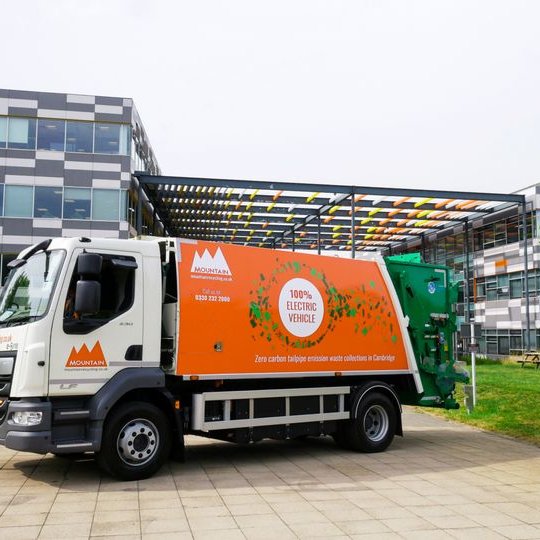
The University of Cambridge is looking to boost the amount of rubbish that gets recycled on campus by introducing new bins, 3D scanners and miles of conveyor belts.
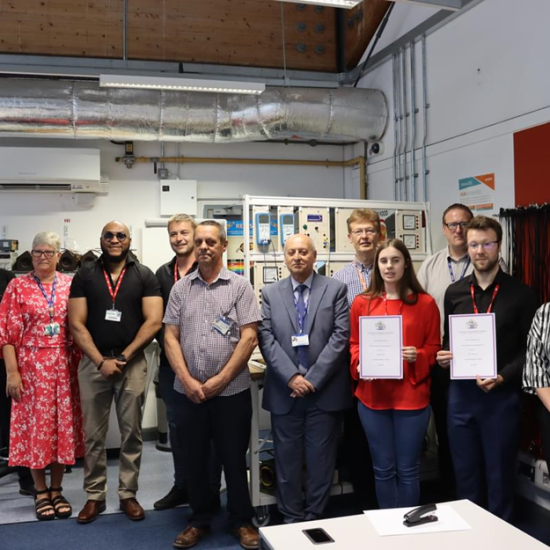
Four students from Cambridge Regional College (CRC) have had their talents recognised by The Institute of Engineering and Technology (IET)’s Cambridge Network.

In a national first, researchers from the University of Cambridge have helped develop a 3D-printed, smart piece of concrete infrastructure for a National Highways project.

A teenager from Cambridge has won a national award in the prestigious Big Bang UK Young Scientists & Engineers Competition.

Construction has started on Cambridge South, Cambridge’s new railway station, which will serve the city’s Biomedical Campus.
Cambridge has been named one of the most desirable places to live in the UK, in a list recently published by The Telegraph.