Barclays reopens revamped Cambridge Eagle Lab for climate tech startups
Barclays has reopened its revamped Cambridge Eagle Lab, a space where high-growth climate tech startups can connect, grow and scale.
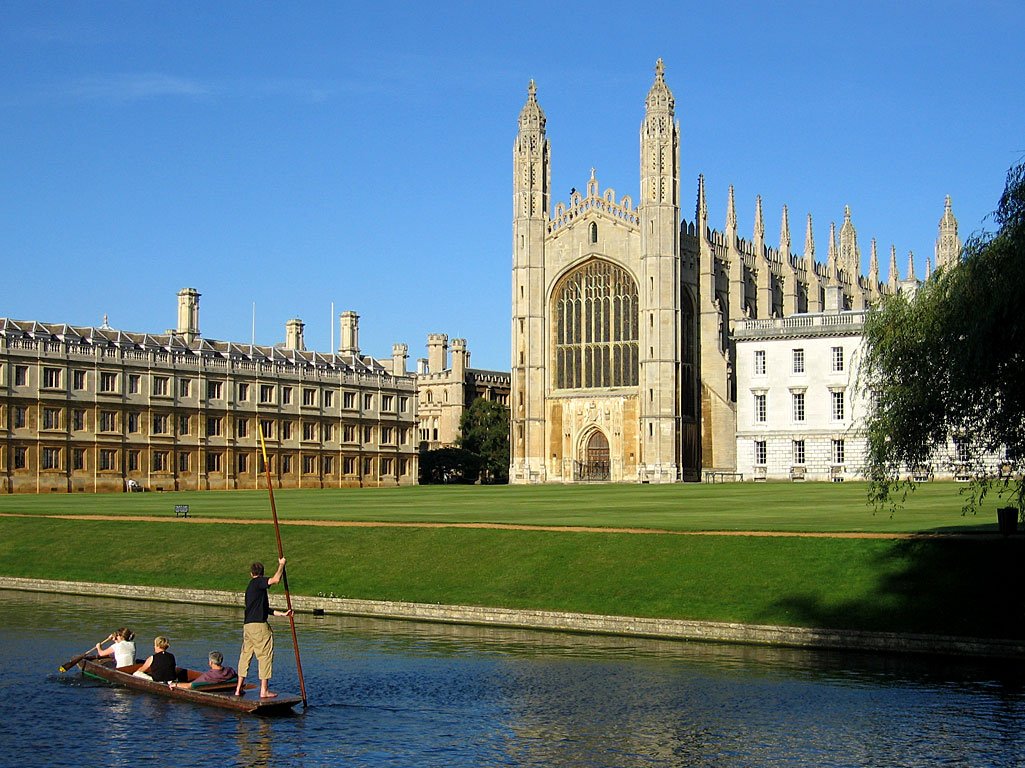
King's College Chapel, University of Cambridge. The university is at the heart of Cambridge’s science and technology cluster. Image courtesy of Wikimedia Commons, licensed under the Attribution-ShareAlike 2.0 Generic (CC BY-SA 2.0) license
The thriving Cambridge tech ecosystem is worth more than £150bn and represents 18% of the entire UK’s tech ecosystem, new data has revealed.
According to the analysis by Dealroom for Founders at the University of Cambridge, the Cambridge tech ecosystem is worth more than Spain’s and Italy’s combined.
The data cements Cambridge’s standing as one of the UK’s, indeed Europe’s, deep tech leaders, home to innovative companies such as chip maker Arm and cybersecurity company Darktrace.
The report outlined that, ‘in the first half of 2024 alone, Cambridge tech companies have raised a record-breaking $1.6bn driven by mega rounds for autonomous vehicle company Wayve ($1.05bn) and quantum computing company Quantinuum ($300m).’
Much of Cambridge’s success as a tech hub stems from the city’s university, which is the number one science hub in Europe. Indeed, numerous University of Cambridge alumni have founded notable start-ups, including Hermann Hauser (Arm), Alex Kendall (Wayve), Stewart Butterfield (Slack), Demis Hassabis (DeepMind) and Tessa Clarke (Olio).
Gerard Grech, Managing Director at Founders at the University of Cambridge, said: “Cambridge is a powerhouse of innovation thanks to its combination of groundbreaking entrepreneurs, forward-thinking scientists, research institutions and investors and this data proves that. But we can’t rest on our laurels, we have to ensure that the next generation of venture scientists have the support, mentorship and funding to build the next Wayve or Arm and that is what we are hoping to achieve with Founders at the University of Cambridge.”
Yoram Wijngaarde, founder of Dealroom, said: “Cambridge is a force in the scientific and technology world and for good reason, with the university producing more valuable spinouts than any other in Europe and more successful alumni founders. It’s particularly strong in technologies such as quantum computing, AI drug discovery and semiconductors, as well as life sciences, which are some of the most in-demand sectors for funding and development at the moment. The city needs to ensure it can harness its deep tech expertise to remain top and keep producing category-defining companies in the future.”
Looking for your next technology, science or engineering role? Maybe you’re just starting out in your career? Polytec is here to help you find the perfect position for you. Browse our current vacancies now >>> www.polytec.co.uk/jobs

Barclays has reopened its revamped Cambridge Eagle Lab, a space where high-growth climate tech startups can connect, grow and scale.
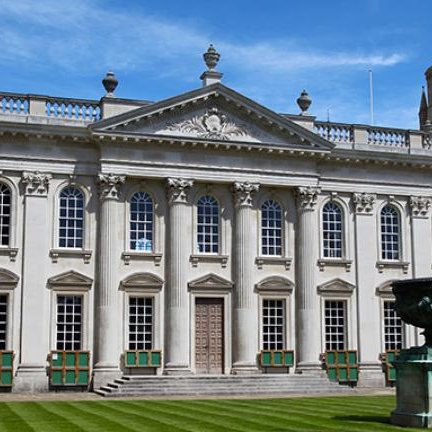
The University of Cambridge and Imperial College London will introduce new admissions tests for science, engineering and mathematics based degree courses as part of a joint venture between the two education establishments.
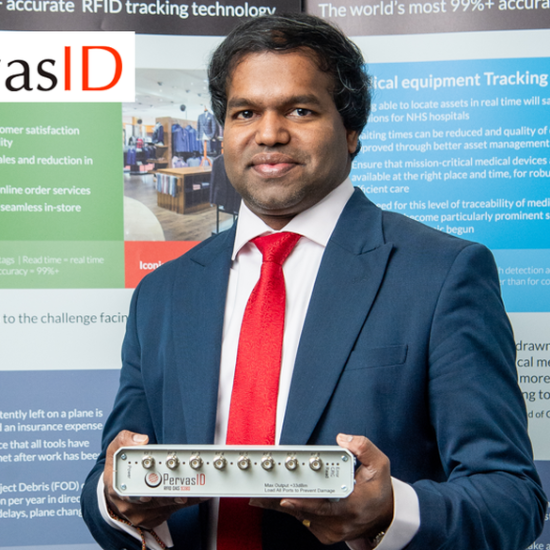
The pioneering founder of a Cambridge company that specialises in location-tracking technology has been recognised in the New Year Honours list.

National Highways has chosen three artificial intelligence companies, including two from Cambridge, to take part in a trial to investigate how the technology can be used to help improve roadworks projects.

A planning application has been submitted for a new science district in Cambridge.

The year 2023 saw artificial intelligence impact our language, a reality highlighted by popular dictionaries’ words of the year.

South Cambridge District Council has unanimously approved a proposal for a new 125,000 sq. ft. next generation life sciences hub in Cambridge.

The Greater Cambridge region’s corporate economy has significantly outperformed the UK average during the year ending in mid-February 2023, a new analysis of official data has revealed.
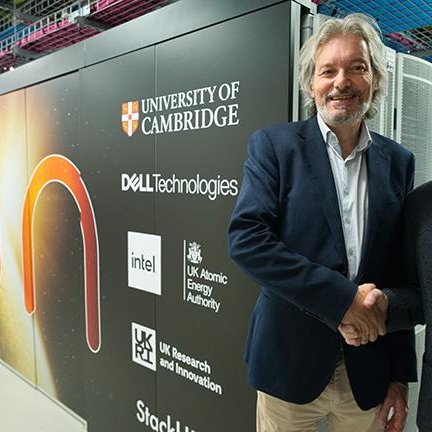
A partnership between Dell, Intel, the University of Cambridge, UK Research and Innovation (UKRI) and the UK Atomic Energy Authority (UKAEA) has resulted in phase one of the UK's fastest artificial intelligence (AI) supercomputer being delivered.
The University of Cambridge and Google have deepened their long-standing artificial intelligence (AI) partnership, with the latter sponsoring a new research centre at the university.

A first of its kind in the world 3D printed post office has opened in Bengaluru, southwest India.
The developer behind a new science district planned on an old landfill site in Cambridge has said the project will create thousands of jobs.