Cambridge tech ecosystem valued at more than £150bn
The thriving Cambridge tech ecosystem is worth more than £150bn and represents 18% of the entire UK’s tech ecosystem, new data has revealed.
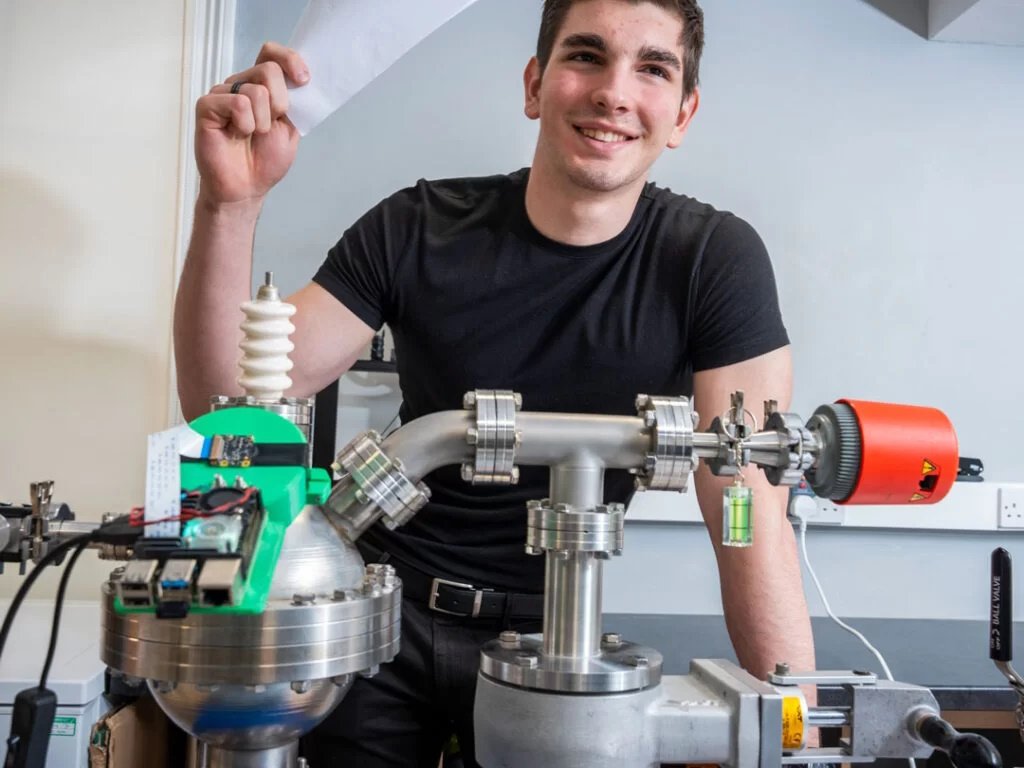
Cesare Mencarini and his self-made nuclear reactor
A student from Cambridge has successfully built a nuclear reactor as part of his college course.
Cesare Mencarini, 17, a student studying Maths, Further Maths, Chemistry, and Physics at Cardiff Sixth Form College's Cambridge campus, built the reactor to generate neutrons as part of his Extended Project Qualification (EPQ), for which he achieved an A* in his A-Levels.
While Cesare did not achieve nuclear fusion, the process by which two light atomic nuclei combine to form a single heavier one while releasing massive amounts of energy, he was able to create plasma, gases that are so hot that electrons are freed from atomic nuclei.
The inspiration for the nuclear reactor project came from a YouTube video and Cesare had to teach himself electrical and coding skills.
Given the limitations of the design and a budget of just over £5,000, he had to get extremely creative, using custom-made parts and a Raspberry Pi system.
Prior to commencing the project, Cesare had to convince his teachers it wasn’t dangerous, with full risk assessments undertaken to gauge safety ahead of the project.
Cesare’s reactor is believed to be the only nuclear reactor built in a school environment and he showcased his work at the Cambridge Science Festival recently.
Speaking about the project, Cesare said: “I had to adapt the design to fit in with the budget and my aim is to encourage other young people to develop ideas and think about how we can improve our world and be innovative. The purpose of the reactor is to produce the necessary conditions for fusion to take place. However, as we cannot get the same pressure achieved by the Sun’s own gravity here, we have to use a high voltage to get the atoms hot enough.”
Dr Julian Davies, Principal, Cardiff Sixth Form College Cambridge, added: “This is an extremely exciting project and has taken 1.5 years in the making. We want to give our students the opportunity to work on projects that interest them as well as teaching them how to pass exams and to be brave in enabling them to take risks and develop projects that are applicable to real life situations. Cesare has been outstanding in his work ethic and will no doubt make a significant impact on the energy industry in the future”.
Looking for your next technology, science or engineering role? Maybe you’re just starting out in your career? Polytec is here to help you find the perfect position for you. Browse our current vacancies now >>> www.polytec.co.uk/jobs
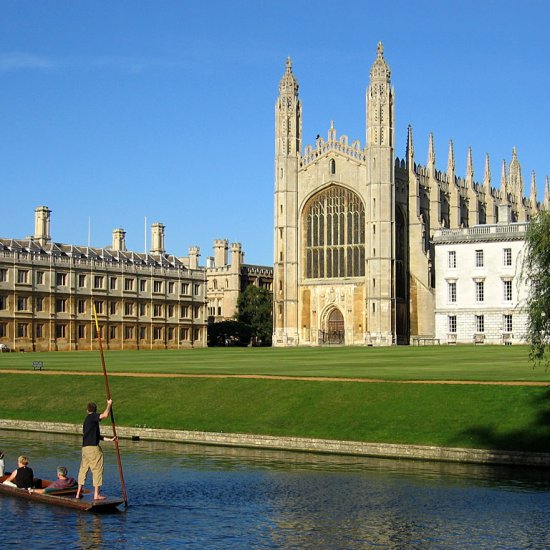
The thriving Cambridge tech ecosystem is worth more than £150bn and represents 18% of the entire UK’s tech ecosystem, new data has revealed.

Experts from the University of Cambridge are warning about the impact of so-called AI deadbots on the loved ones of the deceased individuals they are mimicking.

An abandoned sewage works in Hauxton, Cambridgeshire, which was described by a councillor as being like a “post-apocalyptic wasteland”, will be transformed into a new life science campus after outline planning permission for the project was approved.
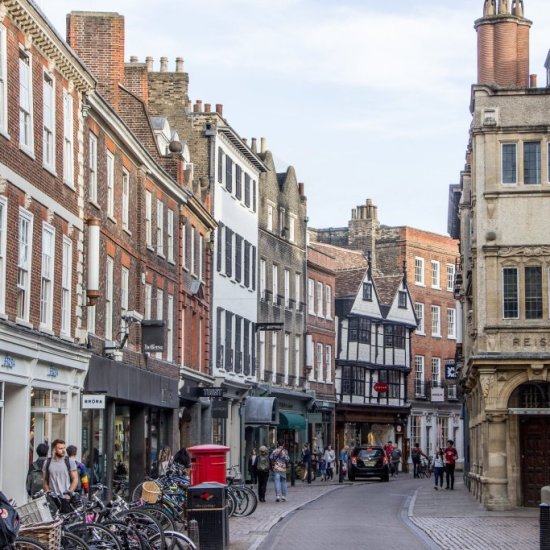
Cambridge city centre has regained its crown as the UK’s most popular shopping destination, new research has revealed.

Artificial intelligence (AI) is as good as some expert eye doctors when it comes to assessing eye conditions, new research has found.

The Industrial Revolution began in Britain under the reign of the Stuarts in the 17th century – more than 100 years earlier than history books credit – new research suggests.

A new partnership has been created to help children in East Cambridge get better access to science, technology, engineering and mathematics (STEM) through hands-on workshops.
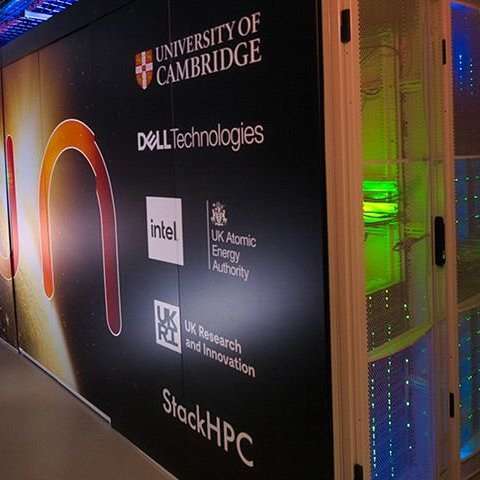
An AI supercomputer with enough power to help researchers solve the world’s most complex challenges is now up and running in Cambridge.

Three University of Cambridge researchers have been awarded £10m by the Royal Academy of Engineering to develop emerging technologies with high potential to deliver economic and social benefits to the UK.
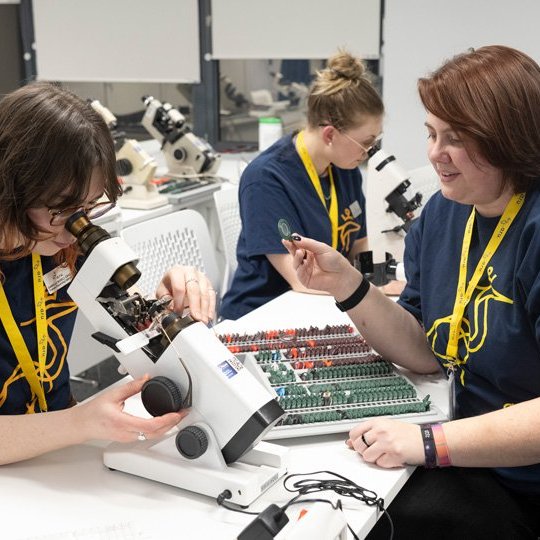
Anglia Ruskin University (ARU) has opened a new £1.9m Sensory Sciences Centre at Compass House on East Road in Cambridge.

A Cambridge-based cleantech company has secured £5.5m in funding to help drive the development of its biodegradable, plant-based plastic alternative.

Scientists from the University of Cambridge have developed a robot that can read braille twice as fast as humans.