Cambridge remains world's most intensive science and technology cluster
The city of Cambridge is still the world’s most intensive science and technology cluster, a new report has revealed.
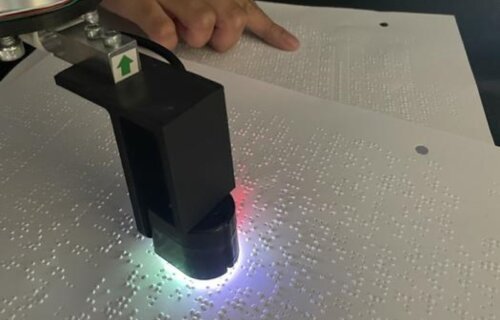
The robot can read braille at 315 words per minute with 90% accuracy. Credit: University of Cambridge
Scientists from the University of Cambridge have developed a robot that can read braille twice as fast as humans.
The robot, which was trained using machine learning algorithms, features a sensor which moves over lines of braille text, much in the same way that human fingers do. Able to read braille at 315 words a minute with 90% accuracy, the robot can read at double the average speed of human braille readers.
However, the primary goal behind the robot’s creation was not to help visually impaired individuals read, rather to pioneer advancements in robotic sensitivity. Indeed, the high sensitivity required to read braille makes it an excellent test of just how sensitive a robot’s ‘touch’ can be. This makes the research potentially important in the future development of robotic hands and prosthetics.
“The softness of human fingertips is one of the reasons we’re able to grip things with the right amount of pressure,” said Parth Potdar from Cambridge’s Department of Engineering and an undergraduate at Pembroke College, the paper’s first author. “For robotics, softness is a useful characteristic, but you also need lots of sensor information, and it’s tricky to have both at once, especially when dealing with flexible or deformable surfaces.”
Co-author, David Hardman, also from the Department of Engineering, added: “There are existing robotic braille readers, but they only read one letter at a time, which is not how humans read.
“Existing robotic braille readers work in a static way: they touch one letter pattern, read it, pull up from the surface, move over, lower onto the next letter pattern, and so on. We want something that’s more realistic and far more efficient.”
In future, the researchers are hoping to scale the technology to the size of a humanoid hand or skin. The research was supported in part by the Samsung Global Research Outreach Program.
The results are reported in the journal IEEE Robotics and Automation Letters.
Looking for your next technology, science or engineering role? Maybe you’re just starting out in your career? Polytec is here to help you find the perfect position for you. Browse our current vacancies now >>> www.polytec.co.uk/jobs
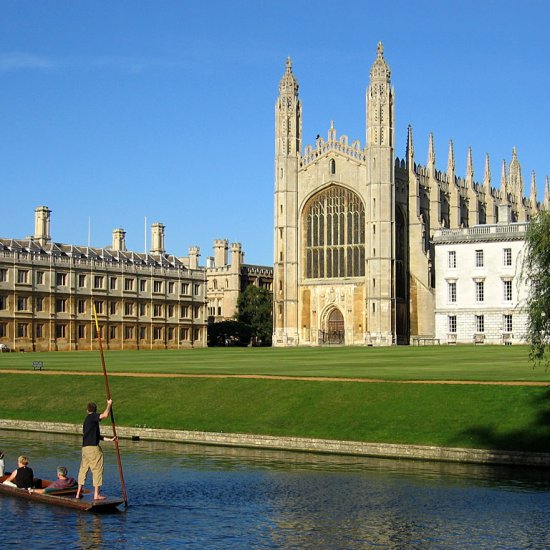
The city of Cambridge is still the world’s most intensive science and technology cluster, a new report has revealed.

The Royal Academy of Engineering has elected 73 leading figures from the field of engineering and technology into its fellowship.
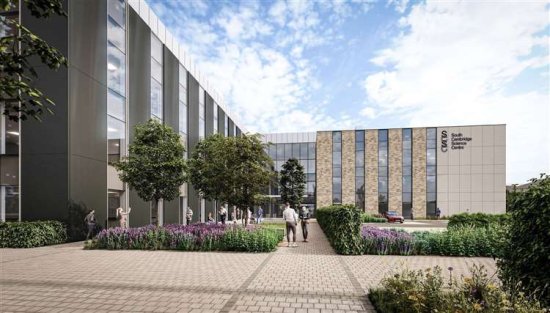
Work has begun on the new South Cambridge Science Centre (SCSC) at a brownfield site in Sawston, south of the city.
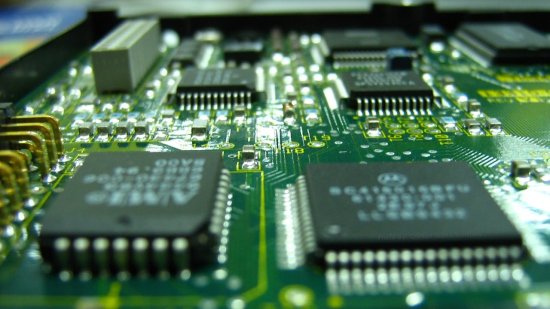
Earlier this month, the UK’s new Semiconductor Advisory Panel met at Imperial College London and members from several Cambridge chip firms were among those present.

A significant proportion of UK employers are turning to counteroffers to retain key staff amid ongoing skills shortages, new research from The Chartered Institute of Personnel and Development (CIPD) shows.

Adopting robots has a U-shaped effect on a company’s profits, driving them down to start with before they rebound and rise, according to new research from the University of Cambridge.
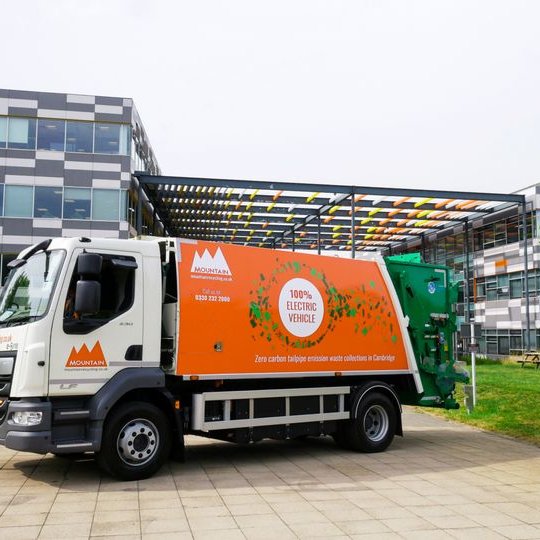
The University of Cambridge is looking to boost the amount of rubbish that gets recycled on campus by introducing new bins, 3D scanners and miles of conveyor belts.
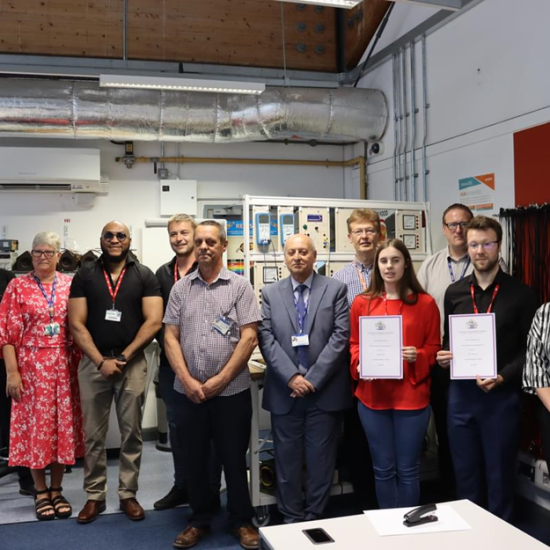
Four students from Cambridge Regional College (CRC) have had their talents recognised by The Institute of Engineering and Technology (IET)’s Cambridge Network.

In a national first, researchers from the University of Cambridge have helped develop a 3D-printed, smart piece of concrete infrastructure for a National Highways project.

A teenager from Cambridge has won a national award in the prestigious Big Bang UK Young Scientists & Engineers Competition.

Construction has started on Cambridge South, Cambridge’s new railway station, which will serve the city’s Biomedical Campus.
Cambridge has been named one of the most desirable places to live in the UK, in a list recently published by The Telegraph.