Cambridge Science Park unveils masterplan to create 20,000 jobs and triple economic output
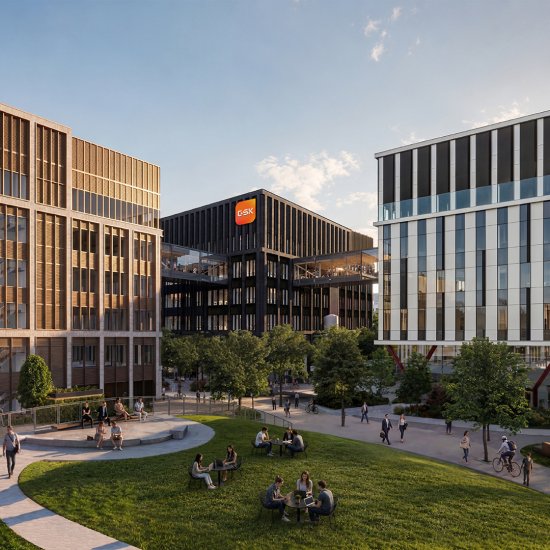
Cambridge Science Park has submitted a major new masterplan for planning consent, setting out proposals to almost triple the site’s built footprint as it looks to drive the next phase of growth in the UK’s innovation economy.
Founded by Trinity College in 1970, the privately funded park plans to expand from 2.8 million sq ft to around 8 million sq ft of commercial, research and collaborative space over the coming decades. The development is expected to support approximately 20,000 new high-value jobs across the life sciences, technology and clean energy sectors, taking the total number of people working on the site to as many as 27,000.
According to the Science Park, the expansion would also triple the site’s annual economic contribution from £1bn to more than £3bn, while generating thousands of construction and support roles during the build phase.
Alongside the commercial expansion, the masterplan includes proposals for a new “Park of Science” designed to improve public engagement with STEM subjects. The facility will feature outdoor exhibits, an open-air museum and links to the Cambridge Science Centre, with the aim of creating greater access to science and technology education for schools, families and local communities.
The College said it is already working with local educational leaders to identify how STEM learning opportunities can be expanded for children and young people across Cambridge, Peterborough and surrounding towns and villages.
Jane Hutchins, director of external relations at Cambridge Science Park, described the plans as a “once-in-a-generation opportunity” to reimagine the site while maintaining its role as a public-facing innovation hub.
She said the masterplan would deliver “greater benefits for local communities in Cambridge and beyond”, while supporting sustainable growth through improved public transport links, cycling infrastructure, flood resilience and biodiverse landscaping.
Dame Sally Davies said the Science Park had already had a significant global impact over the past five decades, but warned continued growth would be essential if it was to meet future scientific and technological demands.
“We know that if the Science Park is to continue to serve the needs of people around the world, it must continue to grow,” she said.
Davies added that the plans were intended to create “a vibrant, collaborative and inspiring place to learn, to work and to enjoy”, while reinforcing the importance of collaboration between science, education and industry.
If approved, the development would mark one of the most significant long-term expansions in the history of the Cambridge innovation cluster.
Looking for your next technology, science or engineering role? Maybe you’re just starting out in your career? Polytec is here to help you find the perfect position for you. Browse our current vacancies now >>> www.polytec.co.uk/jobs
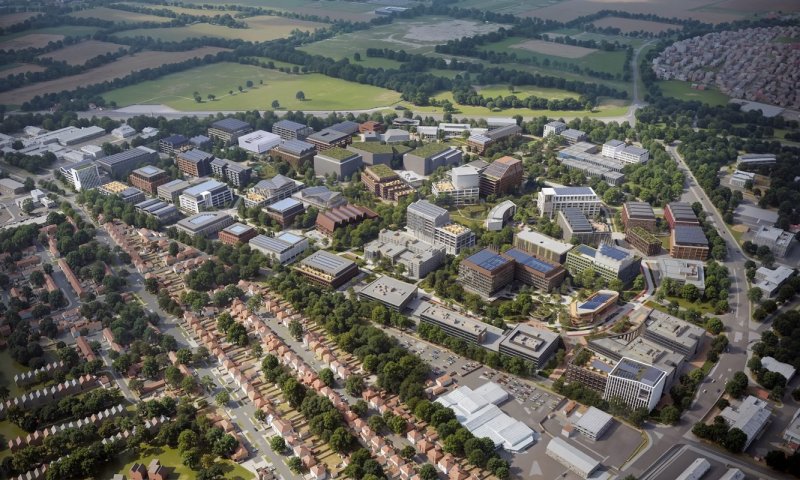
Image credit: Cambridge Science Park