Tech giant Apple set for major Cambridge expansion
American tech giant Apple is all set to move its local workforce into a new seven-storey office block in the centre of Cambridge, a move which, insiders say, could spark a major recruitment drive.
At a time when energy costs are spiralling and tackling climate change is at the forefront of most people’s minds, innovations that help with both areas are extremely welcome. That’s why a new solar-powered waste-to-fuel system developed by Cambridge researchers could be a game-changer.
The innovative system, which is powered using electricity generated by solar panels, can transform plastic waste and greenhouse gases into sustainable fuels and other valuable products. The system represents the first time that such a process has been achieved in a solar-powered reactor.
During testing, the system successfully converted CO2 into syngas, a key building block for sustainable liquid fuels. Plastic bottles were converted into glycolic acid, which is widely used in the cosmetics industry. The researchers say that by changing the type of catalyst used in the reactor, the system can easily be tweaked to produce different products.
The system is exciting because it potentially addresses two of the biggest challenges facing the world right now: greenhouse gases and plastic waste. Powering the process with solar makes the whole thing that bit more sustainable too.
“Converting waste into something useful using solar energy is a major goal of our research,” said Professor Erwin Reisner from the Yusuf Hamied Department of Chemistry, the paper’s senior author. “Plastic pollution is a huge problem worldwide, and often, many of the plastics we throw into recycling bins are incinerated or end up in landfill.
“Developing a circular economy, where we make useful things from waste instead of throwing it into landfill, is vital if we’re going to meaningfully address the climate crisis and protect the natural world,” said Reisner. “And powering these solutions using the Sun means that we’re doing it cleanly and sustainably.”
The Cambridge team now has plans to further develop the reactor to produce more complex molecules over the next five years.
The Cambridge researchers’ results are reported in the journal Nature Synthesis.
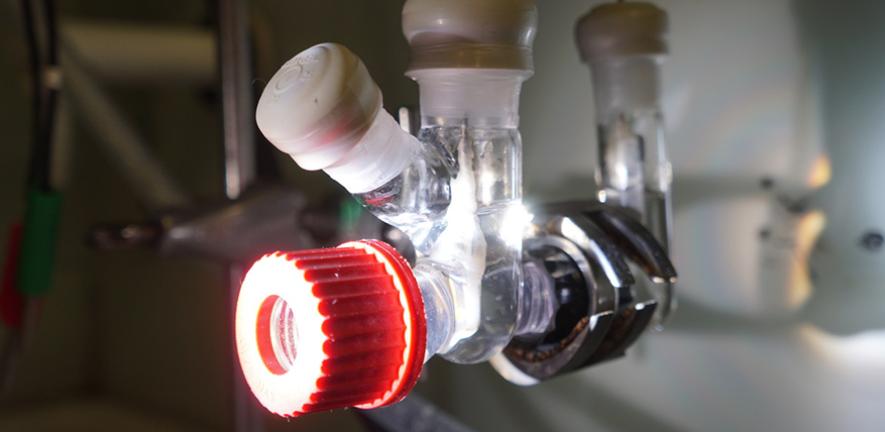
Image credit: University of Cambridge
Looking for your next technology, science or engineering role? Maybe you’re just starting out in your career? Polytec is here to help you find the perfect position for you. Browse our current vacancies now >>> https://www.polytec.co.uk/jobs/

American tech giant Apple is all set to move its local workforce into a new seven-storey office block in the centre of Cambridge, a move which, insiders say, could spark a major recruitment drive.
Engineers from the University of Cambridge have successfully powered a computer using just algae, ambient light and water.
Early-stage venture capital (VC) investor Creator Fund has raised $20m (£15.3m) to invest in the student founders of tomorrow’s unicorns.
A field trial of genetically modified (GM) and gene-edited barley has commenced in the UK to see if more sustainable and equitable ways of farming can be developed.
The CEO and founder of an independent quantum computing company based in Cambridge has said the UK is a quantum computing “leader”.
The finalists for the 2021-22 Cambridge Independent Science and Technology Awards have been revealed.
The life sciences, information technology and telecommunications industries helped the Cambridge city region weather the COVID-19 pandemic economic storm and actually emerge the other side having witnessed growth.
It’s the most successful computer ever to come out of the UK and now the amazing Raspberry Pi has turned 10.
Despite the threat posed by the Omicron coronavirus variant, the UK labour market has continued its great recovery, official figures show.
A team of scientists in Cambridge has developed a fully woven smart textile display which could lead to a "whole new class of smart devices and systems".
A University of Cambridge spin-out has secured £1.3m in funding to accelerate commercialisation of its novel CO2 emission-cutting technology.
A new research centre in Cambridge will focus on cracking one of the UK’s biggest net zero challenges: how to sustainably create next-generation batteries and battery materials.