Cambridge remains world's most intensive science and technology cluster
The city of Cambridge is still the world’s most intensive science and technology cluster, a new report has revealed.

Xampla’s natural and biodegradable Morro materials can replace plastics across multiple high-volume commercial applications. Credit: Xampla
A Cambridge-based cleantech company has secured £5.5m in funding to help drive the development of its biodegradable, plant-based plastic alternative.
Xampla, a Cambridge University spin-off, is aiming to replace plastic with its Morro materials, drop-in, high-performance replacements for the world’s most polluting plastics which, it says, break down quickly and fully without releasing any harmful pollutants into the environment.
Morros is the result of 15 years of research conducted at the University of Cambridge and the latest funding round, which included CIECH Ventures and previous backers Amadeus Capital Partners, Horizon Ventures, Cambridge Angels, Cambridge Enterprise and Martlet Capital, “will support the expansion of our Morro material into new territories and new applications and enable us to make a big impact,” said Alexandra French, CEO of Xampla.
“This investment is a testament to the shared commitment of our backers, who can see that Xampla products are the gateway to a new era in materials sustainability,” she added.
“We are determined to lead the way towards a future where natural materials thrive, and traditional plastics become a thing of the past.”
Szymon Smyk, CEO of CIECH Ventures, added: “Xampla’s innovative approach and impact on the industry align deeply with the values of CIECH Ventures.
“Cleantech solutions capable of addressing real-world problems, such as plastic pollution, and promoting sustainable development are of particular interest to us.”
Xampla says its Morro materials can be used for a variety of applications, ranging from microplastics within homecare products to edible packaging for the food and beverage industry.
The company said it hoped its Morro Coating brand could replace plastic-based coatings in takeaway packaging, sachets and cups, in the future.
Looking for your next technology, science or engineering role? Maybe you’re just starting out in your career? Polytec is here to help you find the perfect position for you. Browse our current vacancies now >>> www.polytec.co.uk/jobs

The city of Cambridge is still the world’s most intensive science and technology cluster, a new report has revealed.

The Royal Academy of Engineering has elected 73 leading figures from the field of engineering and technology into its fellowship.

Work has begun on the new South Cambridge Science Centre (SCSC) at a brownfield site in Sawston, south of the city.

Earlier this month, the UK’s new Semiconductor Advisory Panel met at Imperial College London and members from several Cambridge chip firms were among those present.

A significant proportion of UK employers are turning to counteroffers to retain key staff amid ongoing skills shortages, new research from The Chartered Institute of Personnel and Development (CIPD) shows.

Adopting robots has a U-shaped effect on a company’s profits, driving them down to start with before they rebound and rise, according to new research from the University of Cambridge.
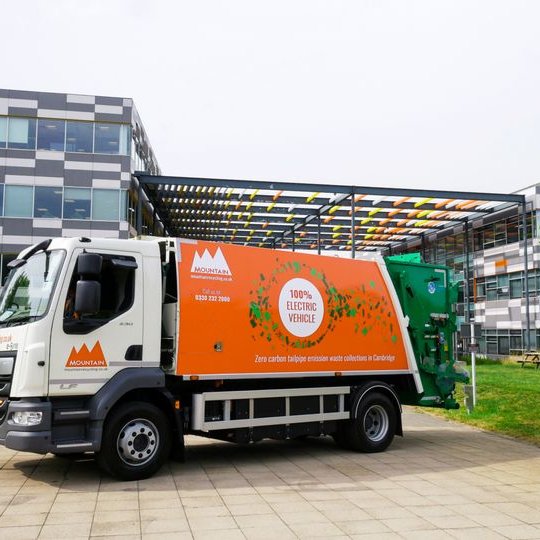
The University of Cambridge is looking to boost the amount of rubbish that gets recycled on campus by introducing new bins, 3D scanners and miles of conveyor belts.
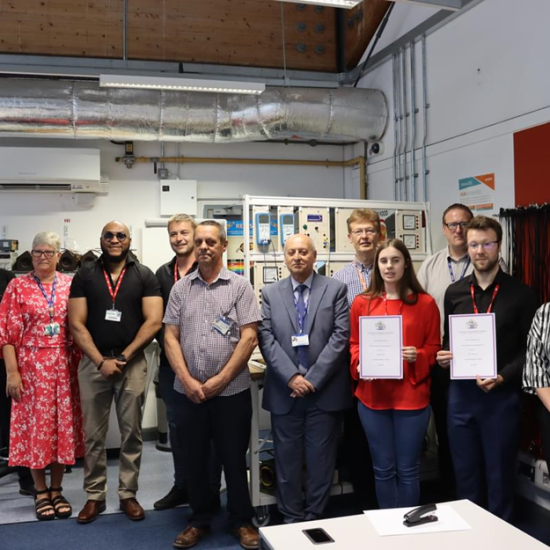
Four students from Cambridge Regional College (CRC) have had their talents recognised by The Institute of Engineering and Technology (IET)’s Cambridge Network.

In a national first, researchers from the University of Cambridge have helped develop a 3D-printed, smart piece of concrete infrastructure for a National Highways project.

A teenager from Cambridge has won a national award in the prestigious Big Bang UK Young Scientists & Engineers Competition.

Construction has started on Cambridge South, Cambridge’s new railway station, which will serve the city’s Biomedical Campus.
Cambridge has been named one of the most desirable places to live in the UK, in a list recently published by The Telegraph.