Ambassador visits Cambridge to boost UK-US innovation ties
The UK Ambassador to the United States visited the University of Cambridge to explore its global leadership in innovation and strengthen transatlantic academic and industrial collaboration.
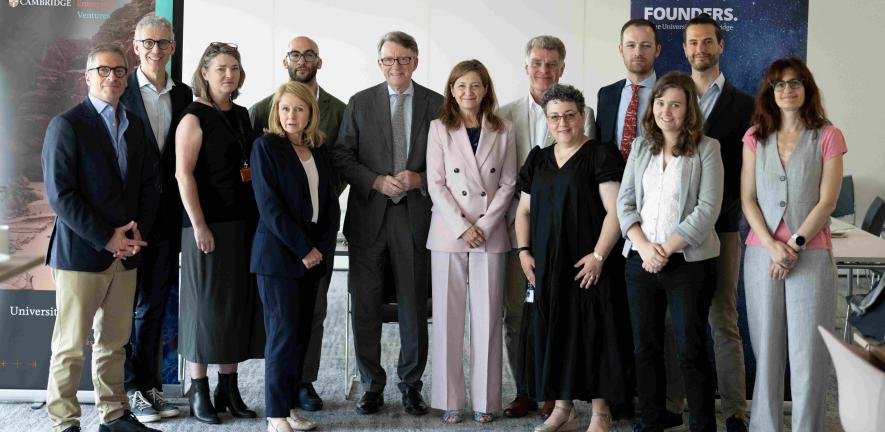
The UK Ambassador to the United States, Lord Mandelson, visited the University of Cambridge recently to explore its global leadership in innovation and strengthen transatlantic academic and industrial collaboration.
Hosted by Founders at the University of Cambridge and Innovate Cambridge, the visit showcased the University’s cutting-edge work in quantum technologies, life sciences, and biotech—fields that are increasingly central to UK-US economic and technological partnerships.
As part of his visit, Lord Mandelson toured the new Ray Dolby Centre, home to the Cavendish Laboratory, where he was welcomed by Professor Mete Atatüre, Head of the Department of Physics. The Ambassador was briefed on Cambridge’s expanding role in quantum research and its growing pipeline of commercial applications.
A highlight of the day was a roundtable lunch hosted by Vice-Chancellor Professor Deborah Prentice at Cambridge Enterprise, the University’s commercialisation arm. Leaders from high-growth companies in AI, quantum, and life sciences joined to discuss opportunities for deeper UK-US collaboration in emerging technologies.
“It was a pleasure to join the Ambassador and colleagues to showcase the full depth and breadth of Cambridge’s research and business strengths—from personalised vaccines and genomics to qubits and semiconductors,” said Professor Prentice. “Cambridge has unique capabilities to help drive the UK-US tech partnership forward, and we’re excited to build on this momentum.”
The visit comes shortly after the signing of the UK-US trade agreement, which sets the stage for enhanced cooperation in technology and innovation. Cambridge is well-positioned to lead the charge: recent research from Dealroom reveals the region attracts more deep tech venture capital per capita than anywhere else in the world, with a tech ecosystem now valued at $222 billion—18% of the UK’s total, second only to London.
Looking for your next technology, science or engineering role? Maybe you’re just starting out in your career? Polytec is here to help you find the perfect position for you. Browse our current vacancies now >>> www.polytec.co.uk/jobs
Image credit: University of Cambridge

The UK Ambassador to the United States visited the University of Cambridge to explore its global leadership in innovation and strengthen transatlantic academic and industrial collaboration.

Researchers from the University of Cambridge and University College London (UCL) have developed an innovative, low-cost robotic “skin” that could dramatically enhance a robot’s sense of touch.

Cambridge has been recognised as the most innovative city in the UK relative to its population, according to a newly released report by Dealroom.
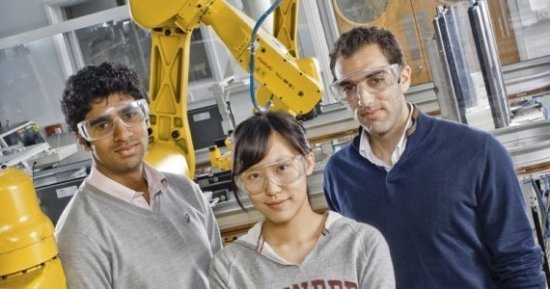
Cambridge’s advanced manufacturing and innovation economy is set for a major uplift following the UK government’s recent trade agreements with India, the United States, and the European Union.
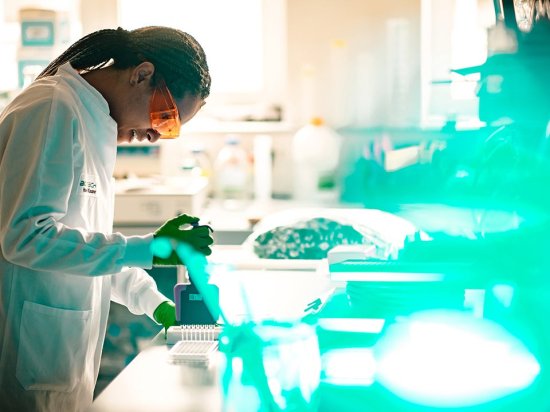
Biopharmaceutical company BioNTech yesterday announced it will invest £1bn in the United Kingdom over the next 10 years, creating hundreds of jobs in London and Cambridge in the process.

Lloyds Bank has partnered with the University of Cambridge to provide artificial intelligence (AI) training to around 300 senior staff.

Cambridge is the UK’s most sustainable city for the second year running, new data has revealed.

Digital technologies are proliferating at such a rate that the scientific systems designed to evaluate their impact on public health cannot keep up, two leading researchers have said.

The University of Cambridge is set to establish a new academic department later this year, aiming to explore how artificial intelligence (AI) can drive economic growth and enhance policymaking.

A new virtual reality (VR) platform has been developed to help people overcome their fear of public speaking.

A venture capital group backed by the University of Cambridge has launched a £100m opportunity fund designed to drive growth among DeepTech and life sciences companies in the region.
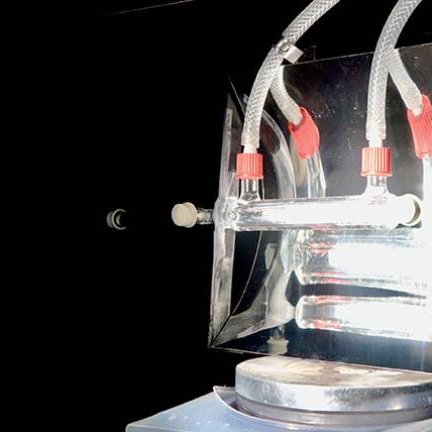
Scientists from the University of Cambridge have created a solar-powered device that converts carbon dioxide (CO2) into sustainable fuel.