Amazon Continues to Invest in Cambridge by Creating a New Team Focussed on Amazon Scout
Amazon is now actively hiring software development engineers in Cambridge who specialise in robotics and autonomous systems technology.
The new Cambridge-based team is another example of Amazon's continued investment in the city and the UK. Amazon Scout joins other teams that form Amazon's innovative Cambridge Development Centre, which hosts groups focused on other pioneering areas.
The creation of the Amazon Scout team in Cambridge comes after Amazon announced earlier this month that it was creating 10,000 new permanent roles across the UK in 2020, taking the company’s total permanent UK workforce to more than 40,000.
You can learn more and see Amazon Scout in action in the video below:
Amazon is creating a new team at its Cambridge Development Centre to work on research and development of the company’s autonomous electric delivery robots.
The online giant will recruit a new team comprising dozens of engineers to help it achieve its goals. The new team’s focus will be on developing Amazon Scout* for global use.
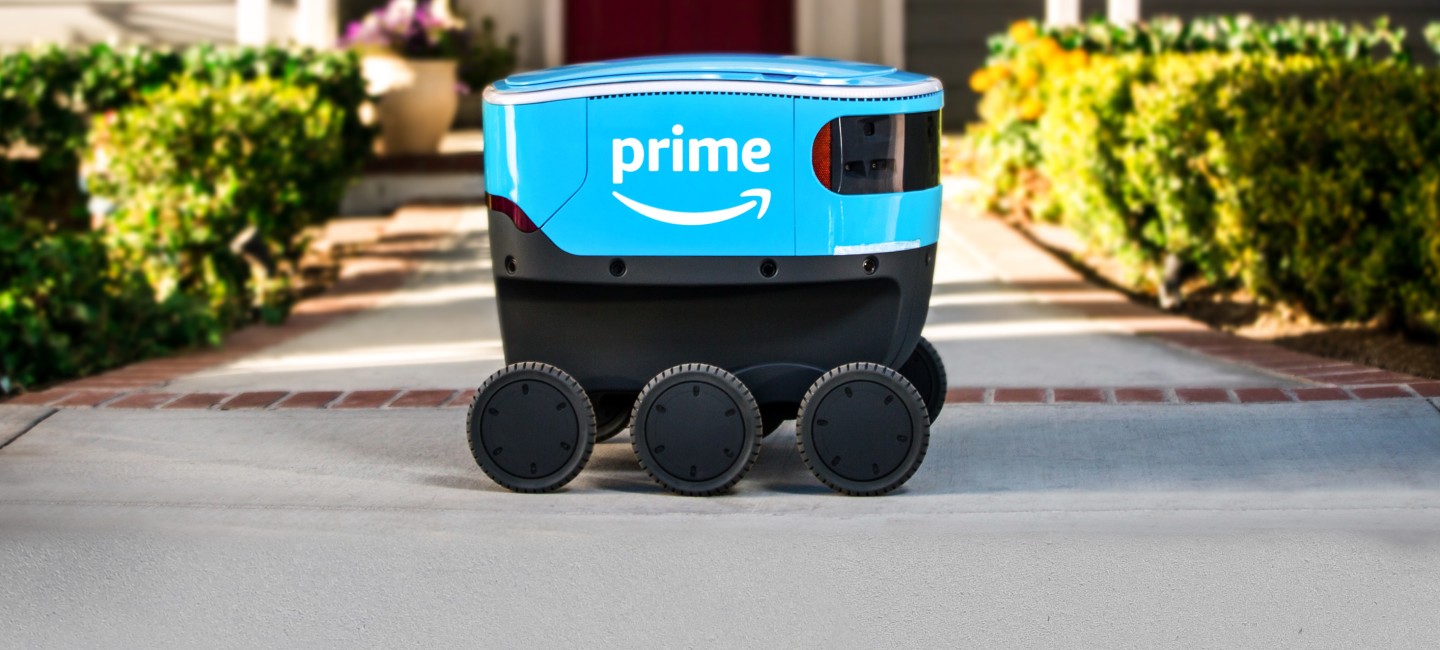
Amazon Scout is a small, fully-electric, self-drive delivery service. The Amazon Scout devices themselves (pictured above) are about the size of a small cooler and trundle along pavements at walking pace. Once one arrives at its delivery destination, a hatch opens so the customer can remove what they’ve been sent.
Right now the autonomous delivery vehicles are only being used in four US states as part of a field test, but the project is set to expand.
“The team we’re building in Cambridge will work closely with the Amazon Scout research lab in Seattle, US, to develop on-system software to help Scout delivery devices safely and autonomously navigate around pedestrians, pets, and obstacles found in residential neighbourhoods such as recycling bins and sign posts,” Amazon said in a blog post**.
Christmas is literally just around the corner and for many that will mean patronising a busy bar or two for Festive works drinks. An inevitable part of this annual ritual is queuing up and sometimes walking away with the wrong order.
Plastic is a super convenient material, there’s no denying that, which is why we’ve come to rely on it to make everything from containers to drinking straws and mobile phones to vacuum cleaners. But our (over) reliance on plastic isn’t without environmental costs.
Virtual Reality (VR) technology immerses a user inside a computer-generated experience, allowing them to see, hear and interact with amazing 3D worlds. But the extent to which people have been able to physically feel those worlds has, until now, been pretty limited.
Contact lenses are nothing new. In fact, people have been wearing them for hundreds of years to help correct their vision. These small, thin discs of transparent material are usually custom-shaped and carefully formed to ensure they perfectly fit a person’s cornea.
British Summer Time has just ended (did you remember to turn your clocks back?), which means we’re back to Greenwich Mean Time (GMT) until next March. The clocks going back also means we are edging ever closer to winter and if you’re a homeowner with a garden, you’ll know that the prep work you do now really matters before the colder weather hits.
Exploring unknown and hazardous environments always presents a challenge. Burning buildings, for example, are dangerous to navigate, but if there are people trapped inside, it’s a risk our brave rescue teams often have to take.
A significant proportion of young people do not know what a career in engineering entails, new research from EngineeringUK has revealed. It’s a reality that has “far-reaching implications”, according to the Royal Academy of Engineering.
If you’re a pet food manufacturer, what’s the best way to improve your products? By asking an innovative tech company to develop a smart pill that can be eaten by animals and which takes samples as it progresses through their bodies, of course.
Until now, it’s our fingers that have been the things that connect us with computers physically, whether we’re typing on our keyboards or swiping on our mobile devices.
Apps that keep track of what you eat and monitor your steps each day are two-a-penny – and that’s great because it encourages more and more of us to proactively look after our health.
How many times do you look at your smartphone on an average day? For many people, their smartphones are the first thing they reach for when they wake up and the last thing they put down at night.