Barclays reopens revamped Cambridge Eagle Lab for climate tech startups
Barclays has reopened its revamped Cambridge Eagle Lab, a space where high-growth climate tech startups can connect, grow and scale.

Image by Gerd Altmann from Pixabay
Artificial intelligence (AI) is as good as some expert eye doctors when it comes to assessing eye conditions, new research has found.
The AI model GPT-4 – a ‘large language model’ – was tested against doctors at different stages in their careers as part of a study by the University of Cambridge. Each was presented with a series of 87 patient scenarios involving a specific eye problem, and asked to give a diagnosis or advise on treatment by selecting from four options.
According to the study, GPT-4 has clinical and reasoning skills that approach the level of specialist eye doctors. Indeed, GPT-4 gained similar scores to trainee and expert eye doctors - although the top performing doctors scored higher.
However, GPT-4 scored significantly better in the tests than unspecialised junior doctors, who are comparable to general practitioners in their level of specialist eye knowledge.
Speaking about the findings, Dr Arun Thirunavukarasu, lead author of the study – which he carried out while a student at the University of Cambridge’s School of Clinical Medicine – said: “We could realistically deploy AI in triaging patients with eye issues to decide which cases are emergencies that need to be seen by a specialist immediately, which can be seen by a GP, and which don’t need treatment.”
He added: “The models could follow clear algorithms already in use, and we’ve found that GPT-4 is as good as expert clinicians at processing eye symptoms and signs to answer more complicated questions.
“With further development, large language models could also advise GPs who are struggling to get prompt advice from eye doctors. People in the UK are waiting longer than ever for eye care.”
While large language models aren’t likely to replace healthcare professionals, according to the researchers, they do have the potential to improve healthcare as part of the clinical workflow.
The results are published today in the journal PLOS Digital Health.
Looking for your next technology, science or engineering role? Maybe you’re just starting out in your career? Polytec is here to help you find the perfect position for you. Browse our current vacancies now >>> www.polytec.co.uk/jobs

Barclays has reopened its revamped Cambridge Eagle Lab, a space where high-growth climate tech startups can connect, grow and scale.
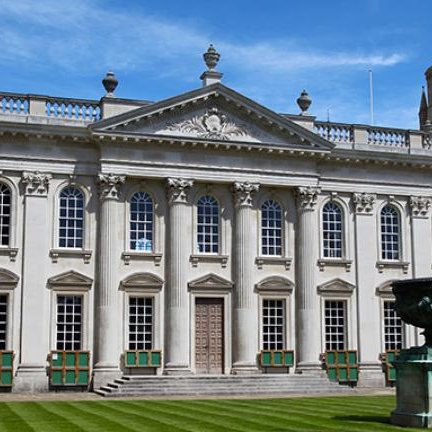
The University of Cambridge and Imperial College London will introduce new admissions tests for science, engineering and mathematics based degree courses as part of a joint venture between the two education establishments.
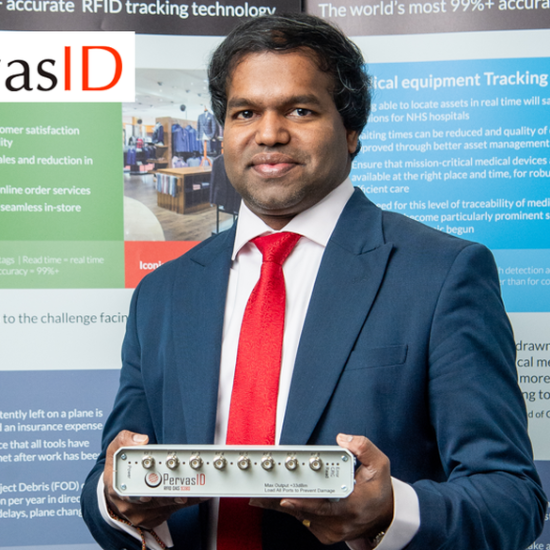
The pioneering founder of a Cambridge company that specialises in location-tracking technology has been recognised in the New Year Honours list.

National Highways has chosen three artificial intelligence companies, including two from Cambridge, to take part in a trial to investigate how the technology can be used to help improve roadworks projects.

A planning application has been submitted for a new science district in Cambridge.

The year 2023 saw artificial intelligence impact our language, a reality highlighted by popular dictionaries’ words of the year.

South Cambridge District Council has unanimously approved a proposal for a new 125,000 sq. ft. next generation life sciences hub in Cambridge.

The Greater Cambridge region’s corporate economy has significantly outperformed the UK average during the year ending in mid-February 2023, a new analysis of official data has revealed.
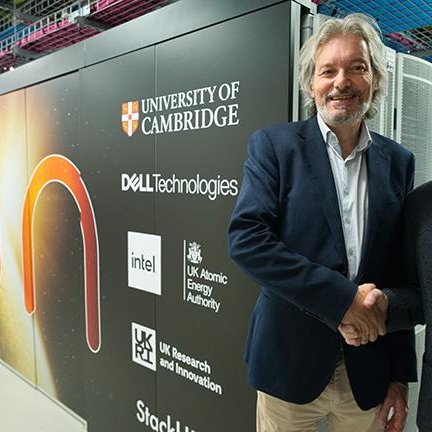
A partnership between Dell, Intel, the University of Cambridge, UK Research and Innovation (UKRI) and the UK Atomic Energy Authority (UKAEA) has resulted in phase one of the UK's fastest artificial intelligence (AI) supercomputer being delivered.
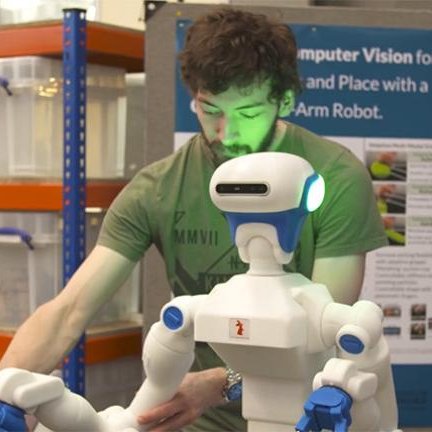
The University of Cambridge and Google have deepened their long-standing artificial intelligence (AI) partnership, with the latter sponsoring a new research centre at the university.

A first of its kind in the world 3D printed post office has opened in Bengaluru, southwest India.
The developer behind a new science district planned on an old landfill site in Cambridge has said the project will create thousands of jobs.